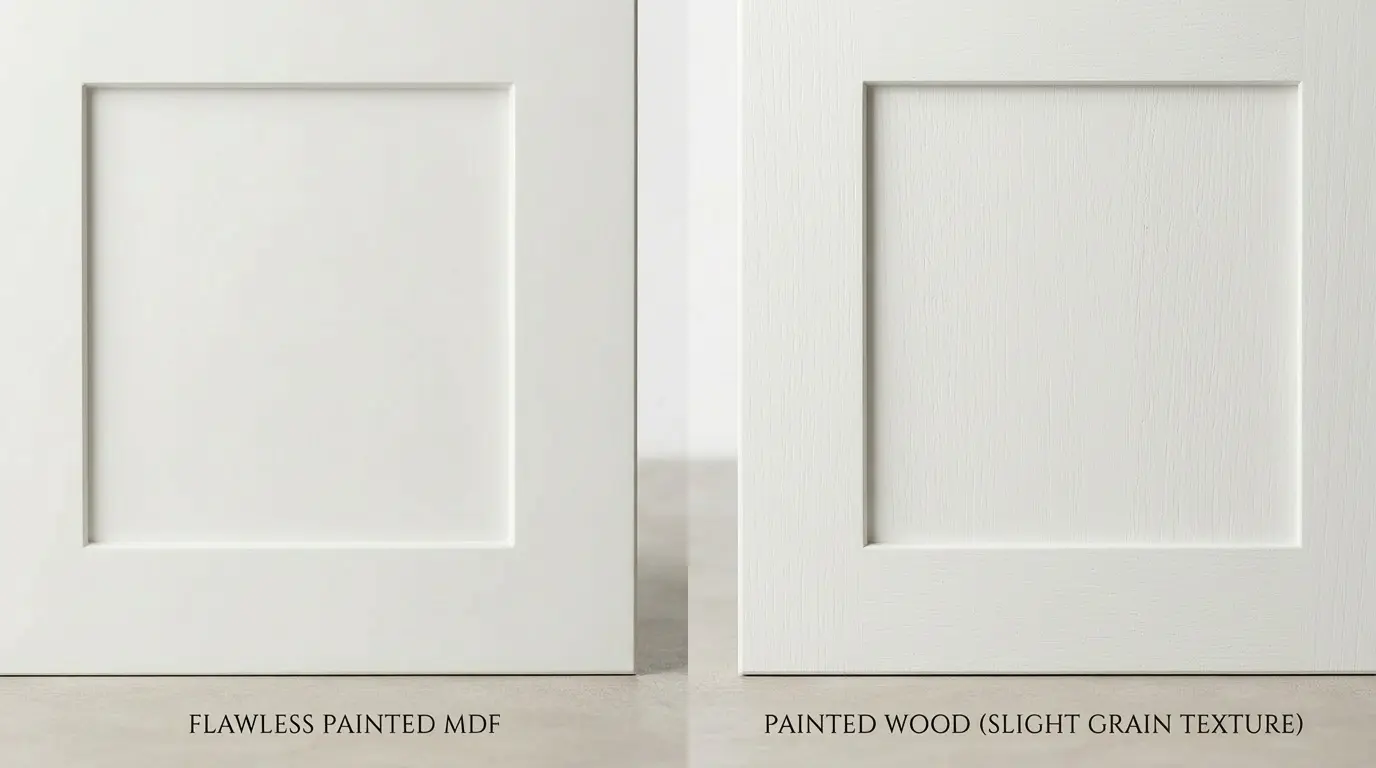
For painted cabinet doors, MDF is often the preferred material. The reason is simple: it creates a very smooth surface, with no grain lines showing through the paint. That helps painted doors look cleaner and more consistent, especially in lighter colours and more refined finishes.
Solid wood can also be painted, but wood naturally expands and contracts with seasonal humidity changes. In Ontario, where indoor humidity can shift quite a bit between winter and summer, that movement can sometimes lead to visible lines, cracks, or paint stress over time.
That’s why many cabinet makers use MDF or other stable engineered materials for painted doors, often with wood edging where needed. When combined with a good finish system, it usually gives the most consistent long-term result.
However, one consideration worth noting: MDF edges can be more vulnerable to chipping on impact than solid wood edges, which is why some cabinet makers use hardwood edging on MDF doors for added durability in high-traffic areas.
For homeowners who prioritize durability over cost, HDF (High-Density Fiberboard) is an excellent upgrade option. HDF is significantly denser than standard MDF, making it more resistant to moisture, edge damage, and impact. In kitchens where the painted doors are near the sink, dishwasher, or frequently used prep areas, HDF can outlast standard MDF by many years. It also resists edge chipping better and holds up better to the wear and tear of daily use. The cost is typically 10-20% higher than MDF, but for doors that will see heavy use, many homeowners consider it a worthwhile investment in longevity.