Homeowner guide
100 Cabinet Questions Answered
100 cabinet questions homeowners ask before renovating a kitchen
Thinking about updating your kitchen cabinets? Homeowners across Welland and the Niagara region tend to ask the same questions before starting a renovation project.
This guide answers 100 of the most common questions about:
Every answer is based on the kinds of real projects Chase Cabinetry helps homeowners plan every day.
Planning a kitchen cabinet project?
If you already know you want help with your kitchen, built-ins, bathroom vanity, or cabinet refacing project, the fastest next step is to request a free estimate.
Tell Chase Cabinetry about your room type, location, goals, timeline, and any photos you already have.
Planning a Kitchen Renovation
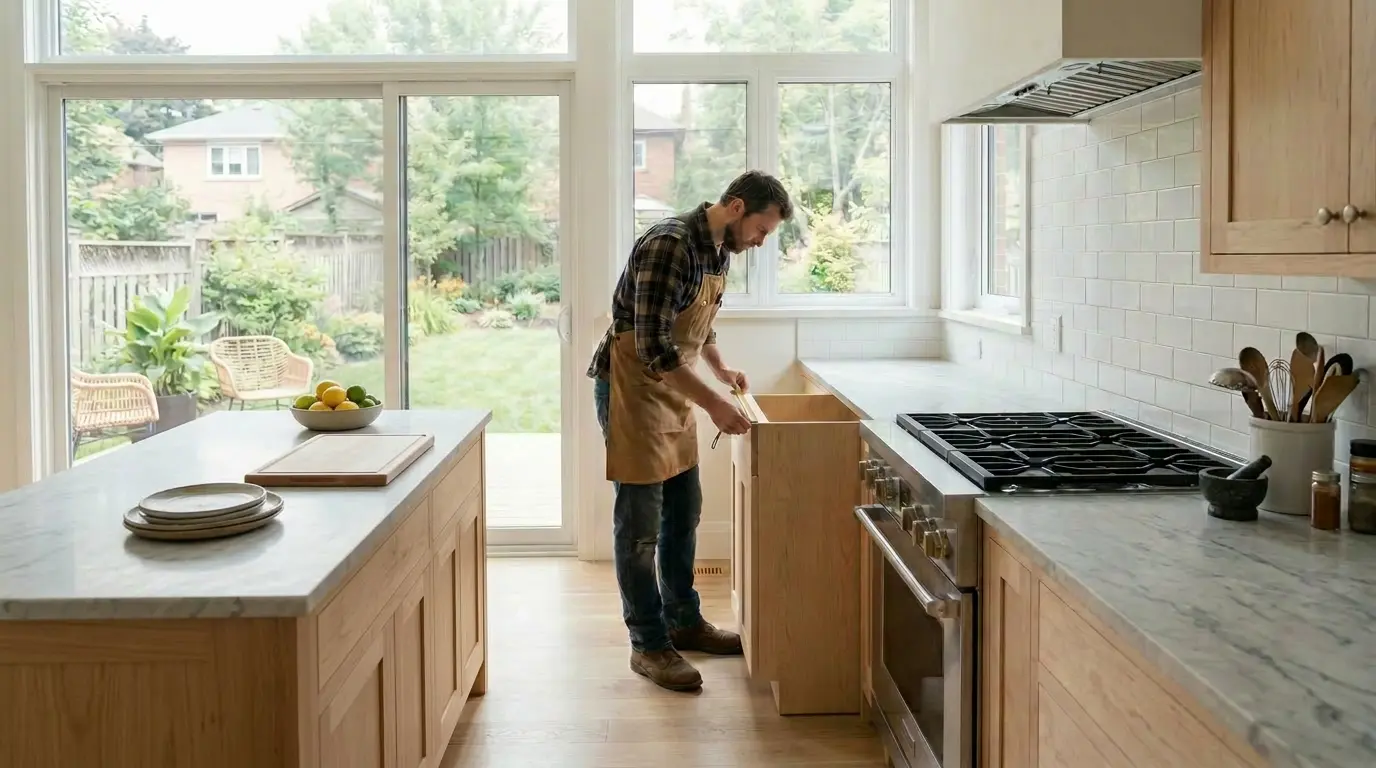
Custom cabinets are built specifically for your home and workplace — not adjusted to fit, but designed from the ground up around your space. Instead of working with pre-made boxes, your cabinet maker starts with raw materials and builds everything to your exact measurements. That process usually takes about 6 to 12 weeks from design approval to installation.
What really sets custom cabinetry apart is the fit and the functionality. There are no filler strips, no awkward gaps, and no wasted space. Everything is designed to work with your room — especially important in homes with uneven ceilings, tight layouts, or unique angles, which are common across Ontario.
Materials are also chosen with care. Most custom shops use a mix of quality plywood, hardwoods, and durable finishes designed to last. The end result is cabinetry that doesn’t just look good — it feels like it belongs in your home because it was made for it.
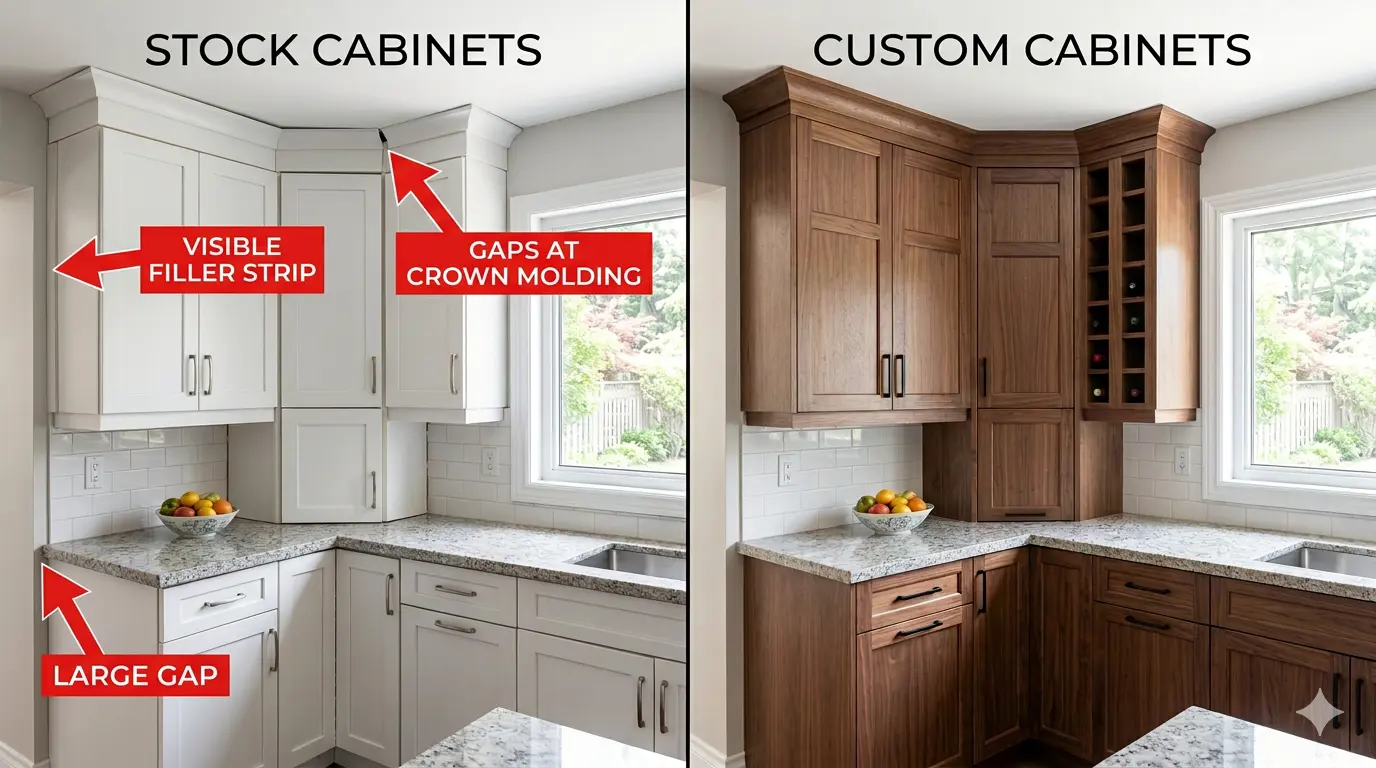
Stock cabinets come in fixed sizes and finishes from a manufacturer’s product line. Custom cabinets are built to your exact measurements, which means no fillers, no awkward gaps, and far more flexibility in how storage is designed.
Stock cabinets are built for convenience. They come in standard sizes, usually in 3-inch increments, and are available quickly — often within a week or two. That works well if your kitchen happens to fit those dimensions. But most don’t.
In many Ontario homes, walls aren’t perfectly square, ceilings vary, and layouts have quirks. That’s where stock cabinets fall short. You end up with filler pieces, gaps, and storage that doesn’t quite work the way you want it to.
Custom cabinets take a different approach. Everything is built to fit your exact space, so instead of working around limitations, the design works around you.
Since cabinetry is commonly estimated to make up 30–40% of a kitchen renovation budget — a figure widely cited across the Canadian building industry — this decision matters more than most people expect. If you’re planning to stay in your home long-term, custom cabinets often deliver better value through improved storage, better fit, and a more intentional result.
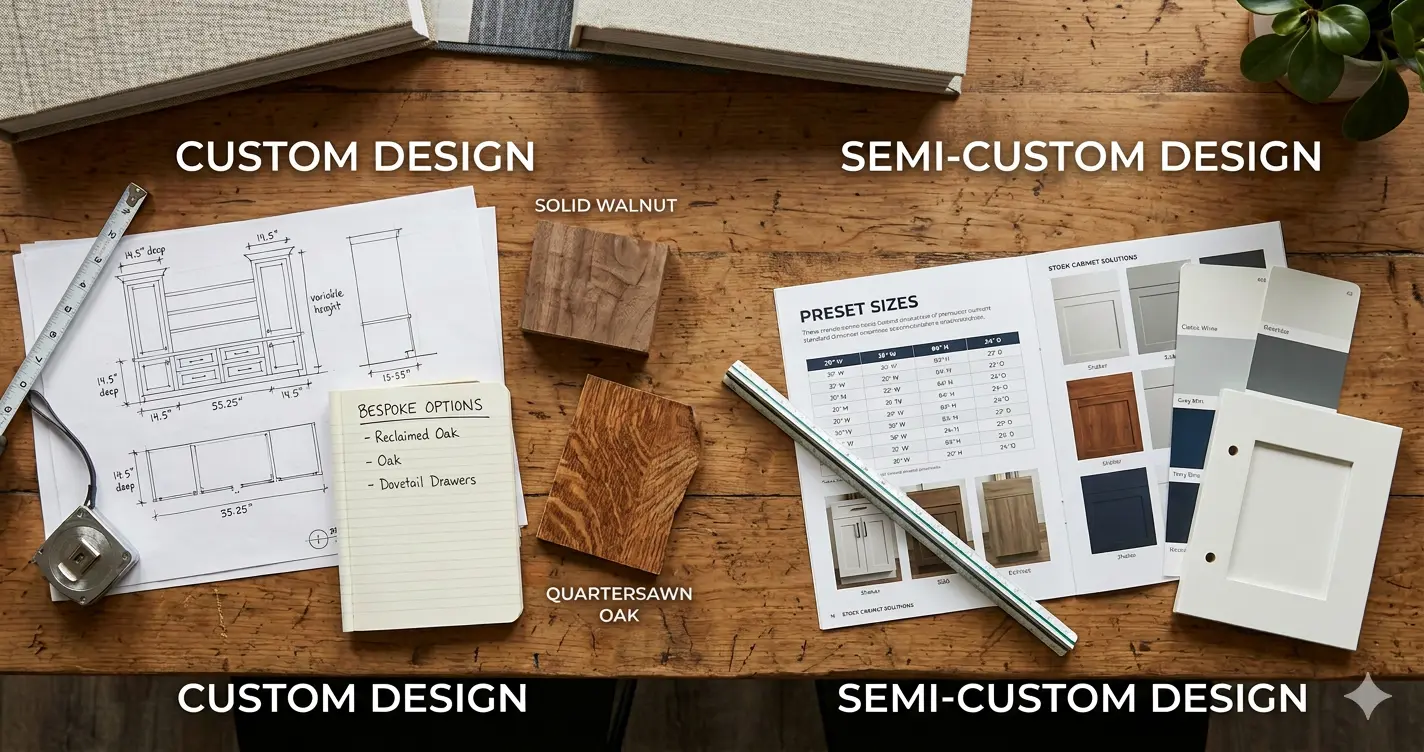
Semi-custom cabinets are made within a manufacturer’s preset system — you get more choices than stock, but the sizing and construction still follow their rules. Custom cabinets have no preset limits on size, depth, layout, storage configuration, or finish.
Semi-custom cabinets give you more flexibility than stock, but you’re still working within a manufacturer’s system. You can usually adjust sizes slightly and choose from a wider range of styles and finishes, but you’re still limited to what that brand offers.
Custom cabinetry removes those limits entirely. Everything is built from scratch, so dimensions, storage features, and finishes are tailored exactly to your space and how you use it. That means you can solve very specific problems — like fitting a drawer into an awkward gap or designing storage around the way you cook and organize your kitchen.
In terms of timeline, semi-custom cabinets usually take 4 to 8 weeks, while fully custom work is closer to 6 to 12 weeks. Cost-wise, custom is typically 20–40% more, depending on materials and complexity — but it also gives you complete control over the final result.

For most homeowners, custom cabinets deliver a better result when fit and storage quality matter. Stock cabinets can work for straightforward kitchens on tight timelines, but they rarely make the best use of the space.
It really comes down to your space and what you need from your kitchen. If your room is simple — straight walls, standard ceiling height, no layout challenges — stock cabinets can work just fine and save you money. But most kitchens aren’t that straightforward.
Across Ontario, especially in older homes, it’s common to see uneven walls, bulkheads, unusual dimensions, or awkward window placements. In those situations, stock cabinets often leave gaps and wasted space. Custom cabinets are designed to solve those exact problems. Instead of forcing your kitchen to fit standard sizes, everything is built around how your space actually exists.
There’s also a durability difference. Stock cabinets often use particleboard boxes and limited hardware, which can show wear sooner — especially near sinks and dishwashers. Custom cabinets typically use stronger materials and better construction methods, which means they hold up longer under daily use.
And when homeowners look back after a renovation, what they value most isn’t just how the kitchen looks — it’s how well it works. Better storage, better flow, and easier daily use are where custom cabinets really stand out.
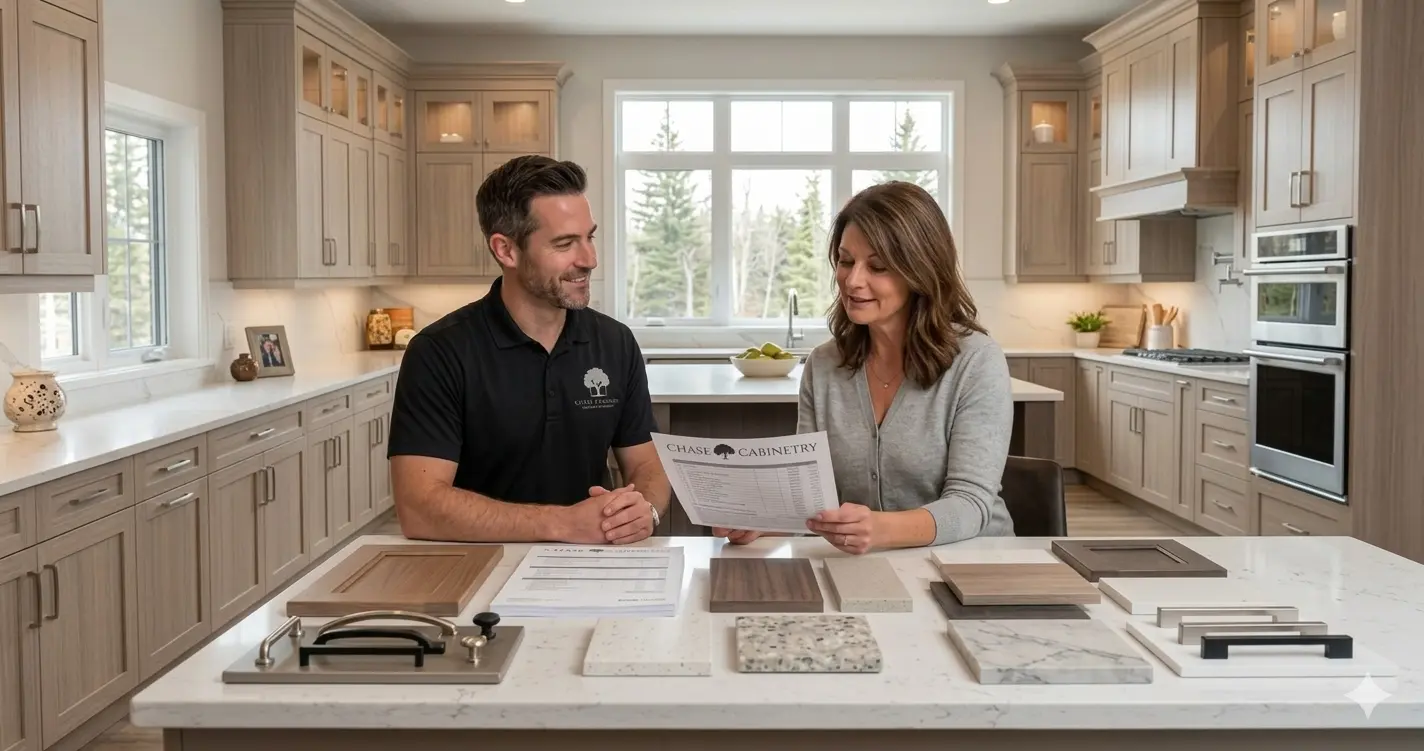
Yes — custom cabinets are a bigger upfront investment, but there’s a reason for that. You’re paying for design time, skilled craftsmanship, higher-quality materials, and a product that’s built specifically for your home. In Ontario, that typically puts custom cabinetry in the $15,000 to $40,000+ range, depending on size and scope. Stock cabinets, by comparison, might cost $5,000 to $12,000 for a similar space.
But the long-term value often tells a different story. Well-built custom cabinets can last 20 to 50 years, while many stock options fall closer to 10 to 25 years. You’re also avoiding compromises like filler strips, wasted space, and layouts that don’t quite function properly.
So while the upfront cost is higher, many homeowners find the long-term durability and daily usability make it worthwhile.
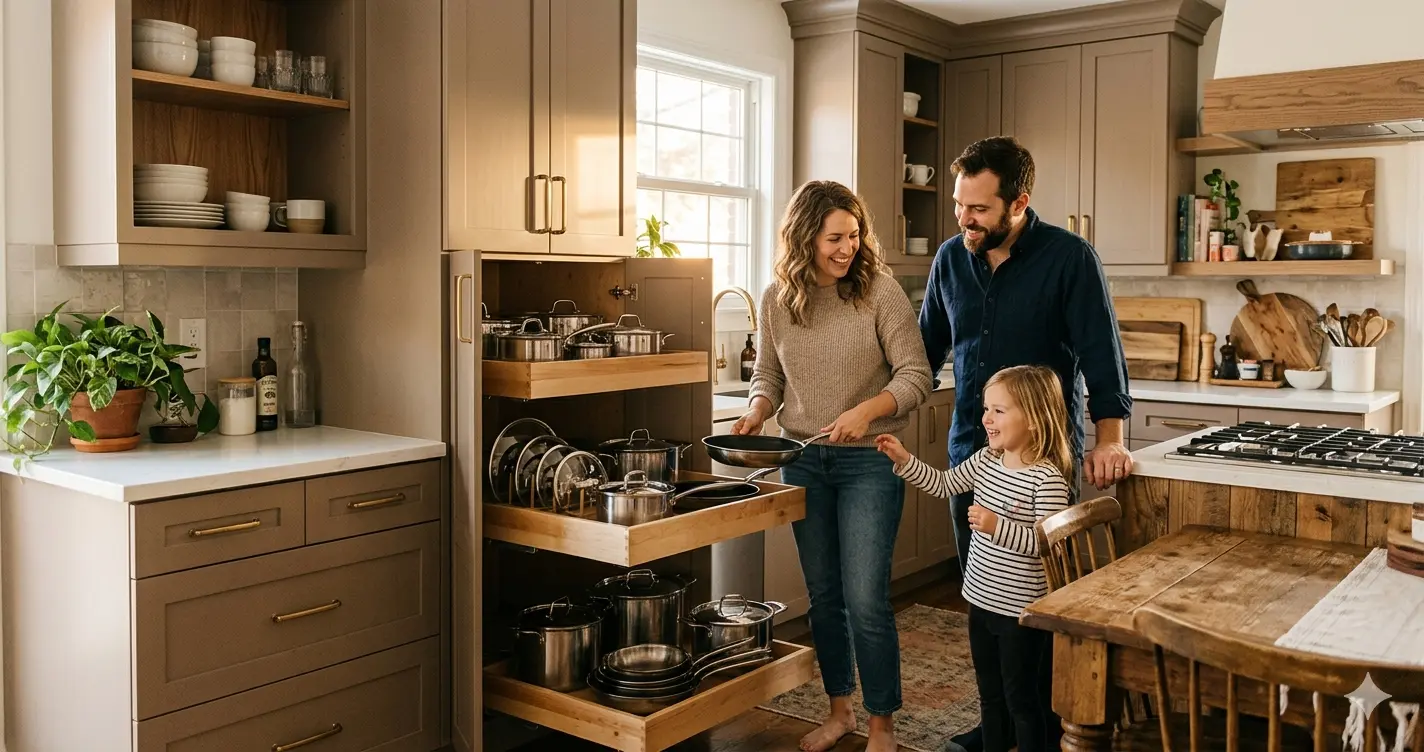
Most homeowners choose custom cabinets for one simple reason: they want their kitchen to work better. It’s not just about how things look — it’s about how the space functions day to day.
Canadian home renovation surveys consistently show that the biggest reasons people renovate are wanting a more updated style and needing better storage and functionality. Custom cabinets solve both at the same time.
You can design storage around how you actually live — whether that means drawers for easier access, built-in organizers, or specific spaces for things you use every day.
For families, that might mean kid-friendly storage or soft-close hinges for safety. For avid cooks, it could be spice drawers, deep pot storage, or dedicated prep stations. For long-term living, it might include accessibility features like pull-out shelves or lower countertop heights. In Ontario specifically, many homeowners also want practical mudroom or entryway storage integrated into their projects, given the seasonal gear that comes with Canadian winters.
It’s about creating a kitchen that fits your routine — not forcing your routine to fit your kitchen.
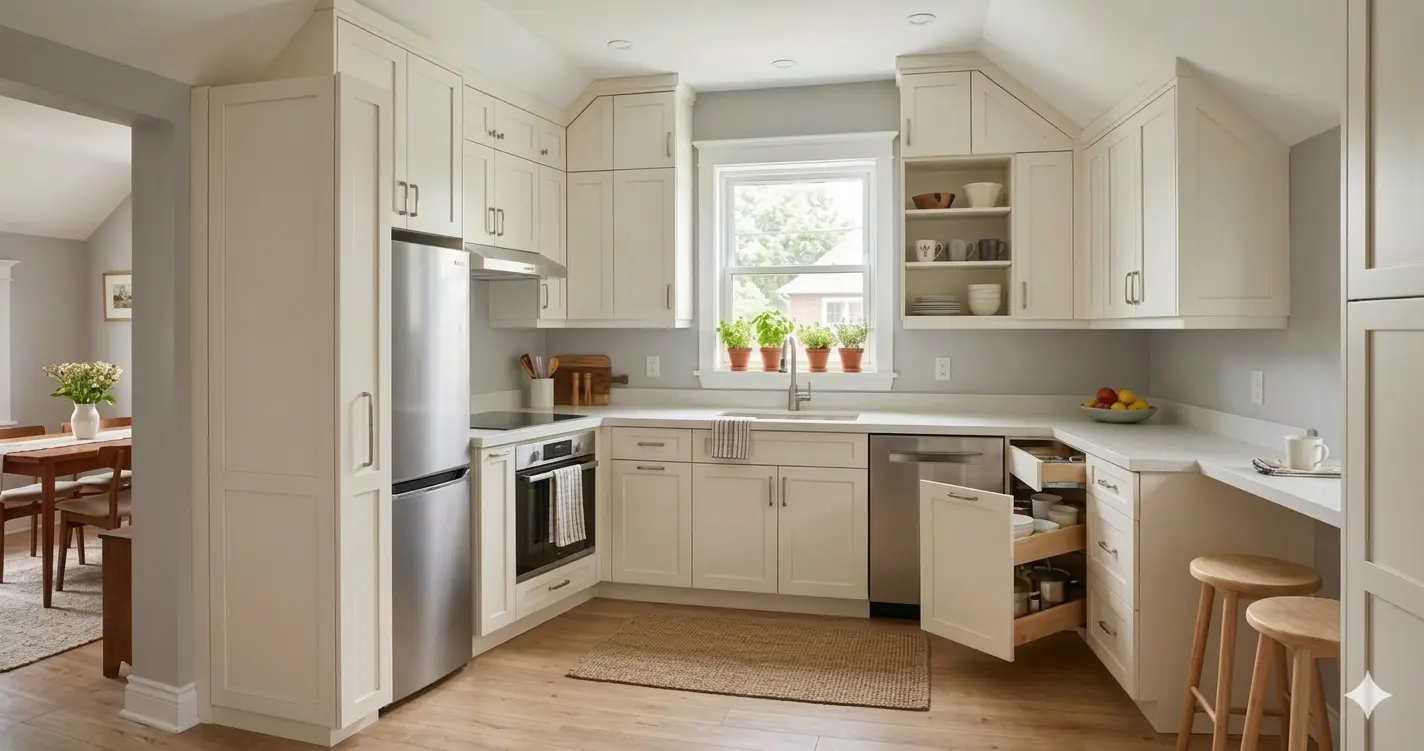
In many cases, they’re even more valuable in a smaller home. When space is limited, every inch matters. And that’s exactly where standard cabinets tend to fall short.
Many smaller Ontario homes — especially older ones — weren’t designed around modern cabinet sizes. That leads to wasted space, awkward gaps, and storage that doesn’t fully work.
Custom cabinets solve that by using every inch efficiently. It’s not uncommon to gain 6 to 12 inches of usable space just by eliminating fillers and designing to exact dimensions.
In smaller kitchens, smart design makes a huge difference. Features like deep drawers, ceiling-height cabinets, and better corner storage can completely change how the space functions.
When you don’t have extra space to work with, good design matters even more — and that’s where custom really pays off.
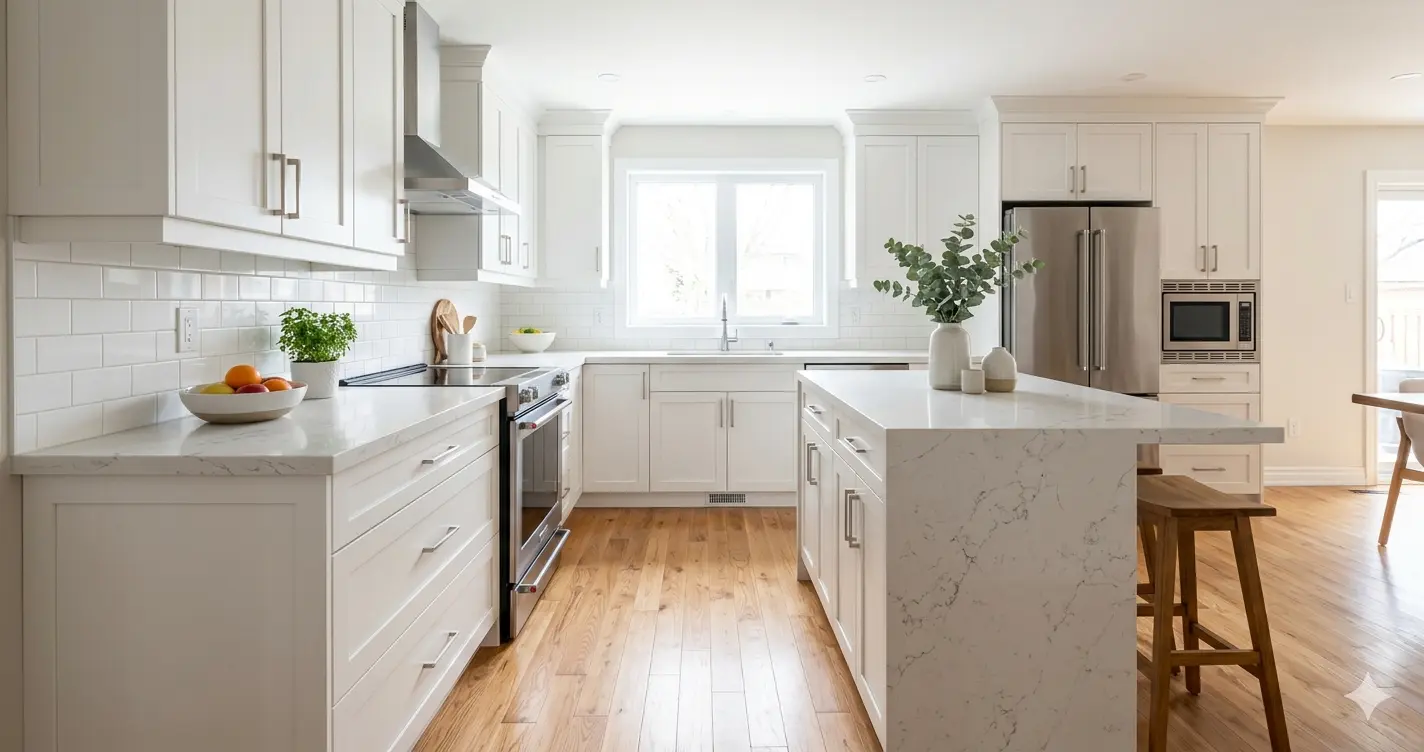
They can — especially when they improve both function and appearance. Kitchens are one of the most important rooms for resale, and cabinetry is one of the first things buyers notice.
Outdated or poorly fitted cabinets can make a kitchen feel tired, even if the rest of the space is fine. On the other hand, well-designed cabinetry signals that the home has been cared for and thoughtfully updated.
In strong markets, homeowners may recover a significant portion of their kitchen renovation investment. Some industry reports suggest returns of 70% or more for mid-range kitchen remodels, though returns can vary depending on the region, scope of work, and local real estate conditions.
If you’re planning to sell within the next 5–10 years, upgrading your cabinets can help your home stand out, sell faster, and feel more move-in ready to buyers.
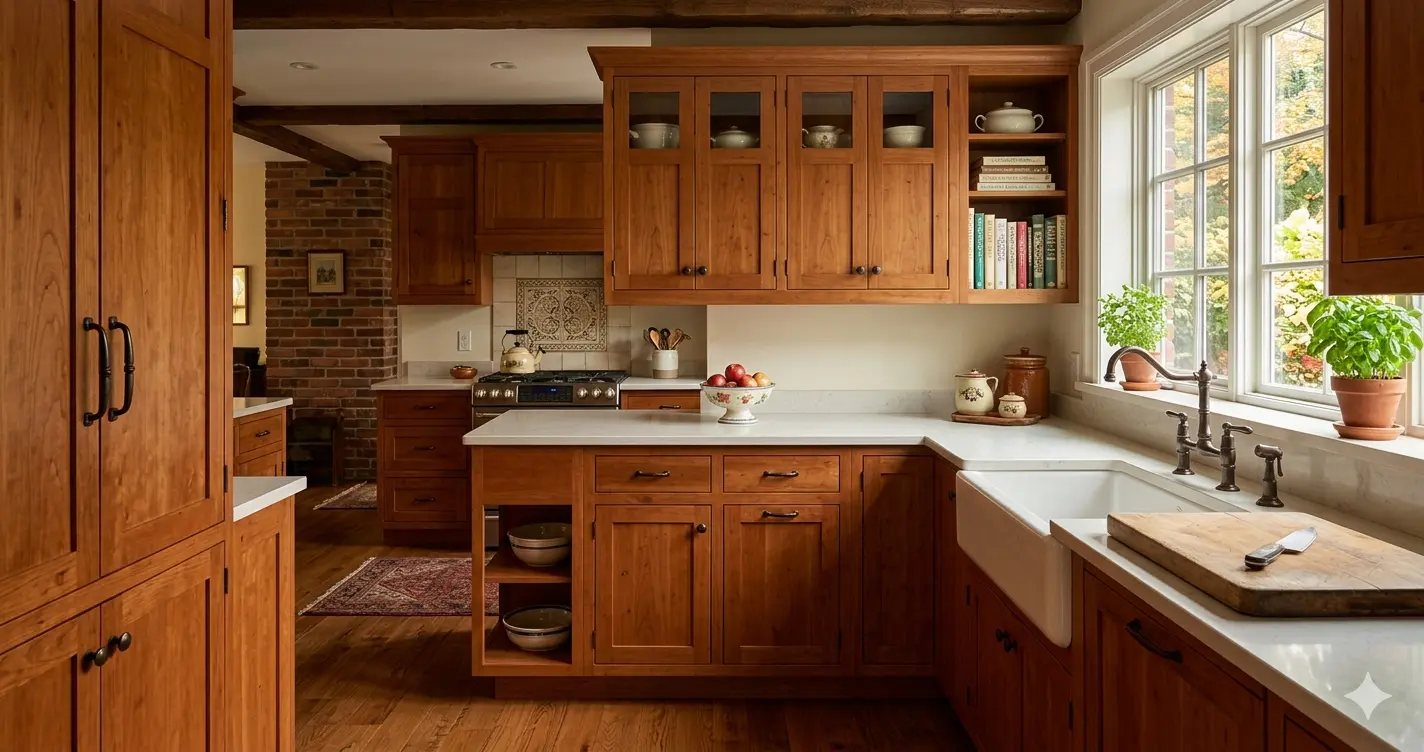
The lifespan of your cabinets depends heavily on how they’re built. High-quality custom cabinets — especially those made with plywood boxes, solid joinery, and durable finishes — can last 40 to 50 years or more with normal use.
Over time, the finish may need refreshing, but the structure itself usually holds up extremely well.
By comparison, lower-quality cabinets, particularly those made from particleboard, tend to show wear much sooner — often within 10 to 25 years depending on construction quality, with particleboard in high-moisture areas like around sinks and dishwashers falling toward the shorter end of that range.
In other words, the materials and construction methods make a big difference in how long your cabinets actually last.
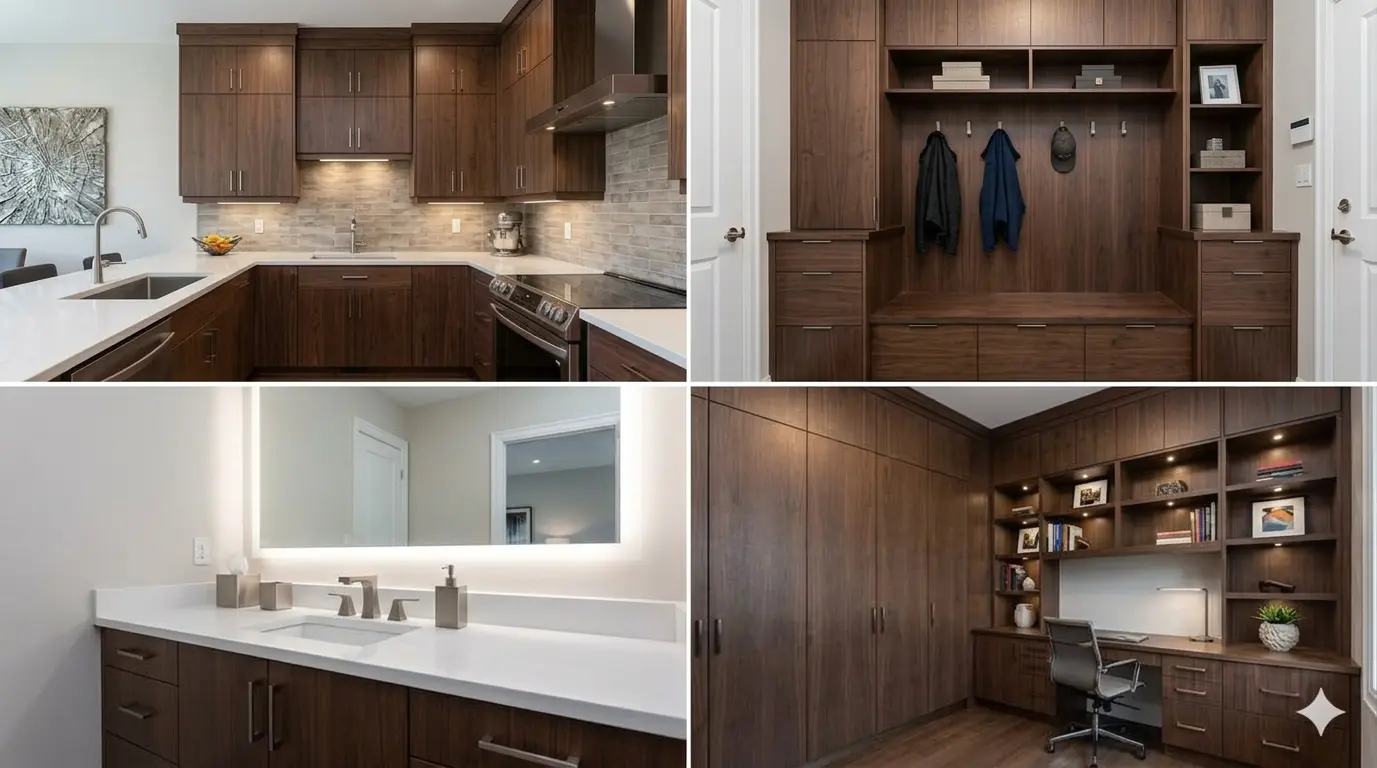
Kitchens, bathrooms, mudrooms, laundry rooms, home offices, living rooms, bedrooms, entryways, basements, and commercial spaces. Anywhere storage is needed, custom cabinetry can be designed to fit.
While kitchens are the most common, custom cabinetry isn’t limited to one room. More homeowners are now using custom cabinets throughout the home — especially as storage needs evolve.
Home offices, for example, have become much more important in recent years. Built-in desks and storage can make those spaces far more functional.
Mudrooms are another big one in Ontario. With winter gear, boots, and coats to manage, having dedicated storage makes daily life much easier.
Laundry rooms, living rooms, and even basements can all benefit from custom cabinetry — especially when standard furniture leaves gaps or doesn’t quite fit.
Anywhere you need organized, intentional storage, custom cabinetry can make a noticeable difference.

Start with function. Think about what you store, how you move through the room, what frustrates you about the current layout, and what daily tasks need to get easier. Style decisions are always easier once you have a clear picture of how the space needs to work.
Before you get too far into colours, door styles, or finishes, it helps to start with the practical side of the project.
Think about how your kitchen works right now. What do you store? What do you use every day? What feels frustrating or inefficient?
Go beyond dishes and cookware. Include small appliances, pantry items, cleaning products, recycling, pet food, kids’ snacks, and anything else that regularly lives in the space. Most homeowners realize pretty quickly that they need more thoughtful storage than they expected. One useful exercise is to open every cabinet and drawer in your current kitchen and photograph the contents — it gives you a concrete inventory to design around, rather than guessing from memory.
It also helps to pay attention to your daily habits. Are you always moving things around to reach what you need? Do the counters feel cluttered no matter how often you clean them? Is your garbage or recycling in an awkward spot?
Those small frustrations usually point to the changes that matter most. In many Ontario homes, common pain points include insufficient pantry space, poor corner cabinet access, and recycling and composting storage that doesn’t match municipal sorting requirements. Once you understand how the space needs to function, the style decisions become much easier — because they’re being built around real needs, not guesswork.
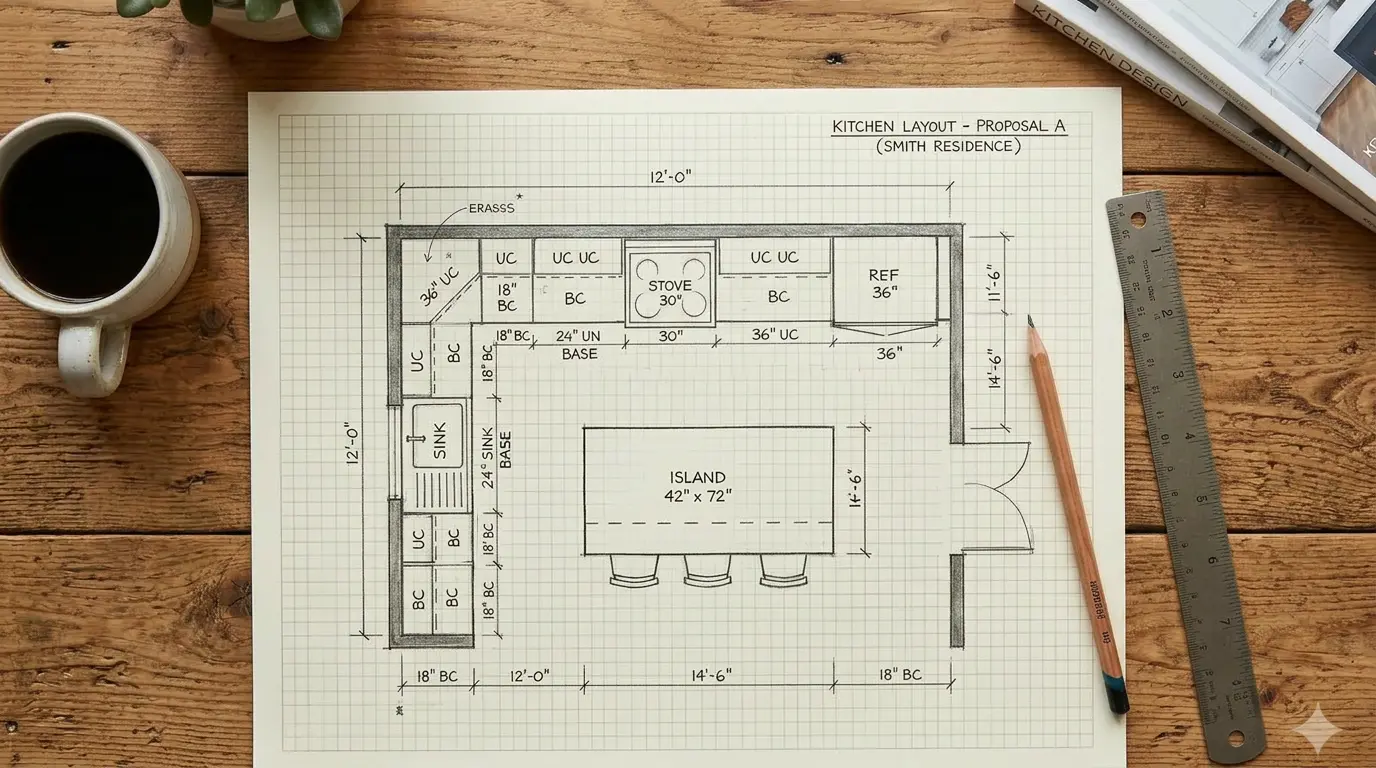
Layout should always come first. A beautiful cabinet style can only do so much if the kitchen itself is awkward to use. When the layout works well, even a simple cabinet design can feel polished, practical, and satisfying every day.
Your layout affects how you move through the room, where your prep space sits, how close your dishes are to the dishwasher, and how natural it feels to cook, clean, and put things away. It’s the foundation of the entire kitchen.
That’s also why layout decisions are the hardest to change later. Once plumbing, electrical, and cabinetry are in place, moving things around becomes expensive very quickly.
Style choices like door profile, colour, and hardware are important, but they come after the bigger decisions are made. When the layout is right first, the finished kitchen usually looks better and works better.
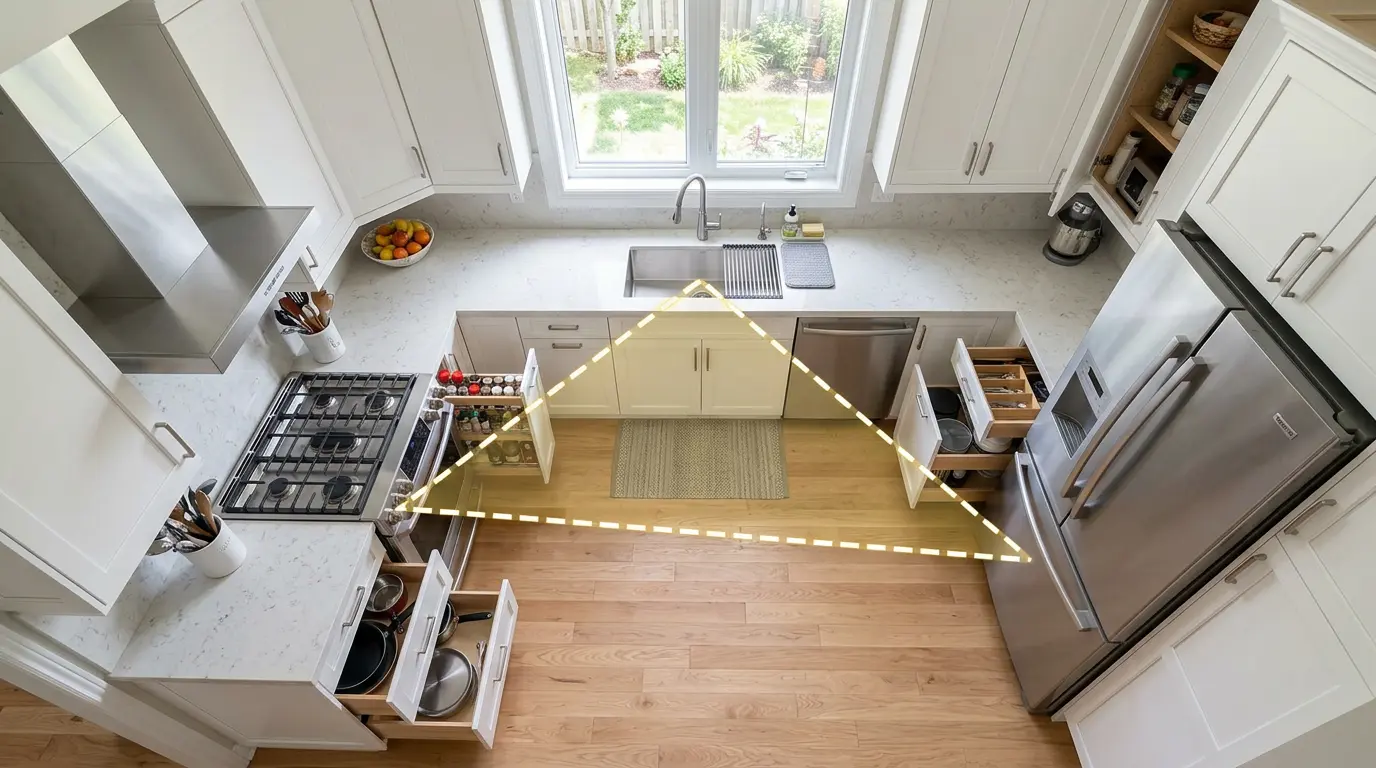
A good layout supports movement, workflow, and access. It places storage where it is actually needed. It avoids dead zones and does not force awkward paths between the sink, stove, and refrigerator.
A good layout makes the kitchen feel easy to use. It supports the way you move through the space, keeps important items close to where they’re needed, and helps everyday tasks feel more natural. You shouldn’t have to work around the room just to make a meal or unload groceries.
In a well-planned kitchen, dishes are near the dishwasher, pots and pans are near the stove, and prep tools are close to your main work area. That kind of planning doesn’t always stand out visually, but you feel it every day.
Clearance matters too. Walkways need enough room for people to move comfortably, especially in busy kitchens or homes with more than one cook. Even small changes in cabinet placement can improve flow in a big way.
A strong cabinet layout doesn’t just fill the room. It helps the room function better.
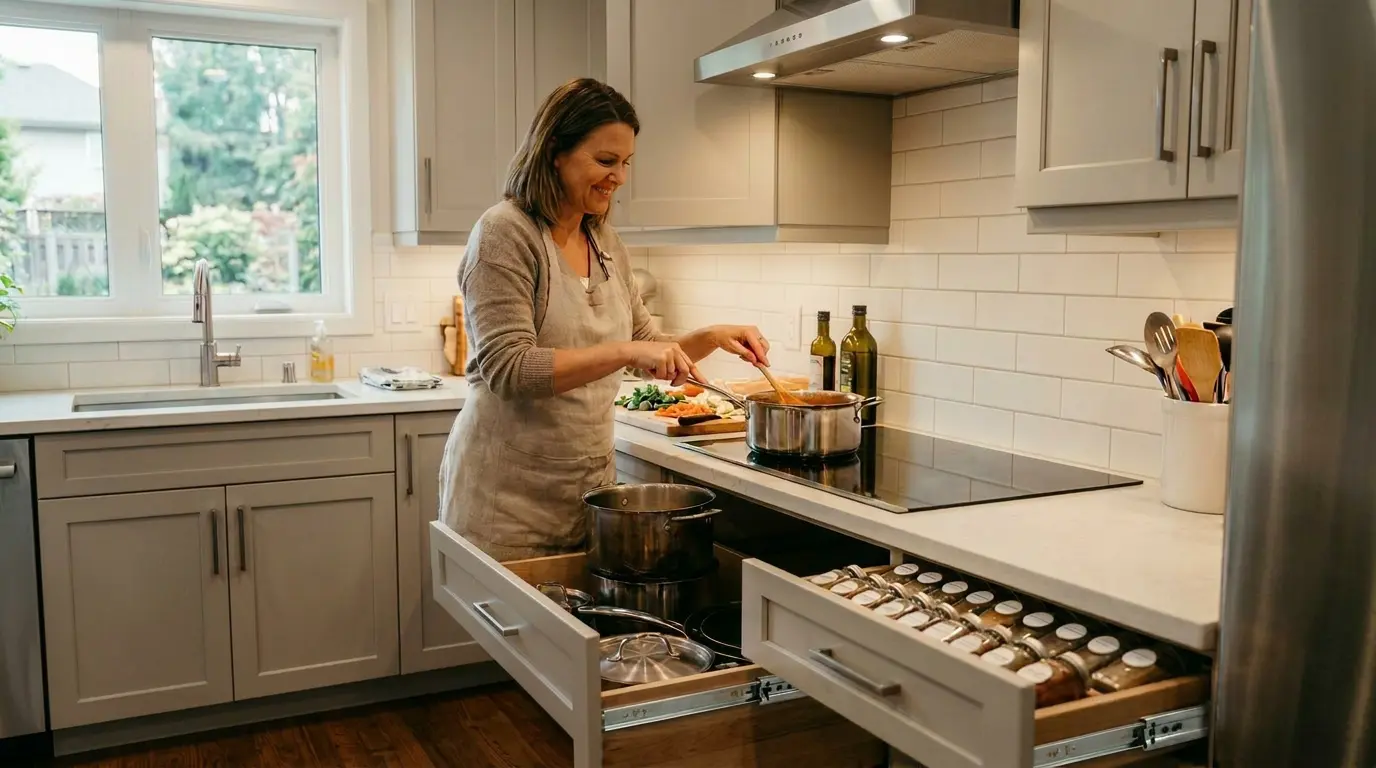
Cabinets affect almost everything you do in the kitchen. They determine where things live, how easy they are to reach, how much counter space stays clear, and how smoothly the room works from one task to the next. That’s why cabinet design has such a big impact on day-to-day life.
A kitchen can look beautiful in photos and still feel frustrating if the storage isn’t planned well. When cabinets are laid out properly, putting groceries away is easier, cooking feels more organized, and cleanup takes less effort.
Features like pull-out shelves, drawer dividers, garbage pull-outs, and well-placed drawers can save time and reduce clutter without adding visual complexity.
Most homeowners notice this after the renovation is done. What they appreciate most often isn’t just the new look — it’s how much easier the kitchen is to use.

If tasks feel awkward, if finding things takes too long, if counter space feels constantly blocked, or if the room feels cramped despite being large enough — those are signs the layout is working against you, not for you.
If your kitchen feels harder to use than it should, that’s usually a sign the layout deserves a closer look.
Maybe there’s never enough clear counter space where you need it. Maybe the fridge door opens into the main walkway. Maybe the dishwasher is too far from where dishes are stored, or the garbage pull-out is in a spot that makes prep awkward.
These kinds of issues are easy to get used to over time, but that doesn’t mean they should stay.
A layout change is often worth considering when the room has enough space, but still feels cramped or inefficient. That usually means the problem isn’t the size of the kitchen — it’s how the space is organized.
It’s also worth remembering that layout changes can affect plumbing, electrical, or structural work, which may mean permits are required in Ontario. That doesn’t mean you shouldn’t do it — it just means it’s worth planning early and understanding the regulatory requirements before committing to a design.
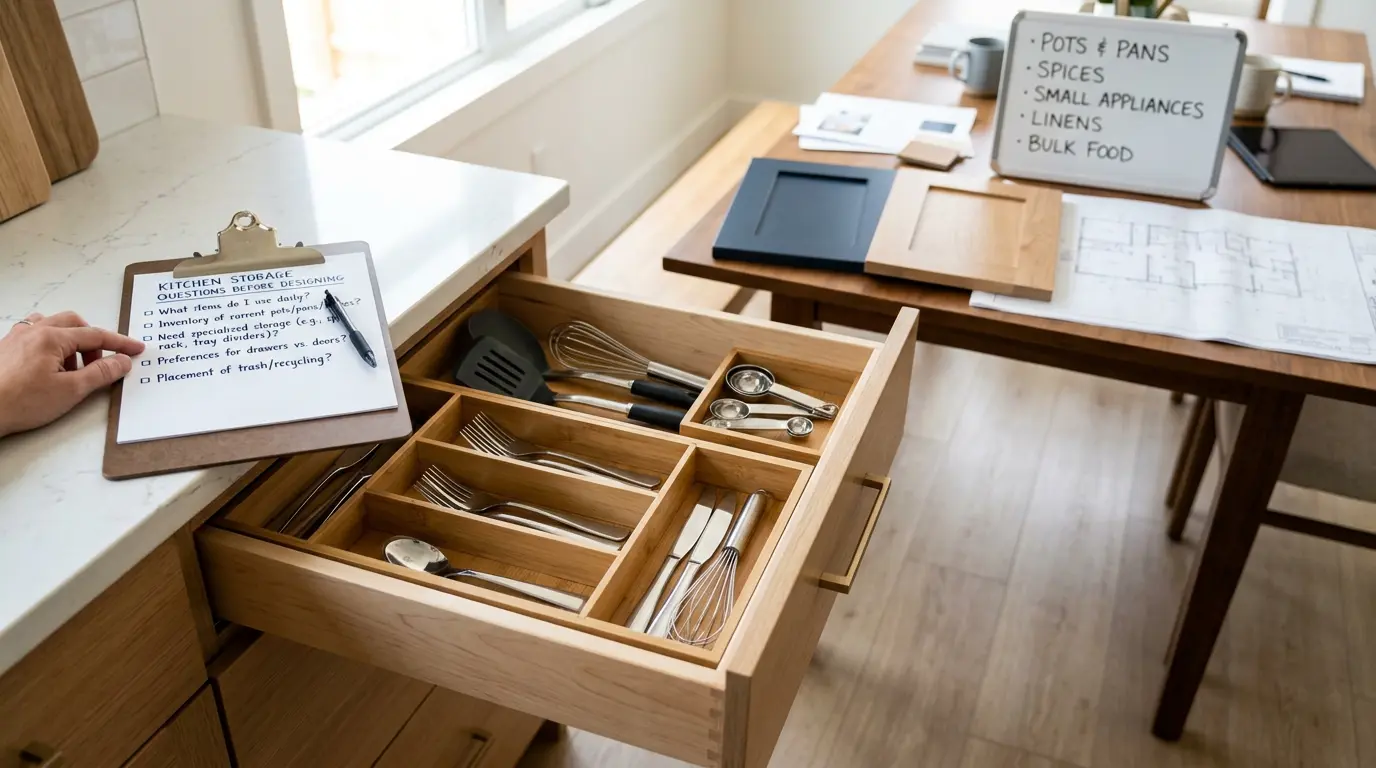
The best cabinet design starts with specific storage questions. Think through everything that needs a home in your kitchen — dishes, pots and pans, pantry items, baking tools, cleaning supplies, food containers, recycling, compost, small appliances, and anything else that gets used regularly.
Then go a little further. What about cookbooks? Reusable bags? Pet supplies? Seasonal platters? Vitamins? Kids’ lunch gear?
These are the things that often get forgotten during planning, but they still need space once the kitchen is finished.
The more clearly you can describe what you actually store and how often you use it, the better your cabinet layout will be. A good designer can take that information and turn it into storage that feels intuitive, rather than generic.

For many homeowners, ceiling-height cabinets are worth it. They give you more storage, create a cleaner built-in look, and eliminate that dusty, awkward gap above the upper cabinets. In homes with standard 8-foot ceilings, they can make the whole kitchen feel more finished.
In taller rooms, the top section — generally anything above roughly seven feet of floor height, where most people can’t comfortably reach without a step stool — usually works best for items you don’t need every day, such as seasonal dishes, serving pieces, or small appliances you only bring out occasionally.
That said, full-height cabinetry does cost more. It takes more material, more finishing, and often more care during installation, especially if the ceiling isn’t perfectly level.
So the choice comes down to both style and function. If you want a more custom look and you’ll use the extra storage, ceiling-height cabinets are often a smart upgrade.

In most kitchens, yes — drawers are easier to live with. With a drawer, everything pulls out toward you, so you can see what you have and reach it without digging around. With a cabinet door and shelf, items tend to get pushed to the back and forgotten.
That difference becomes even more noticeable with pots and pans, food containers, dishes, and other heavier everyday items. Drawers simply make lower storage more accessible.
They’re also easier on your back, since you’re not bending and reaching as much. For many homeowners, that convenience alone makes them worth the extra cost.
A mix of deep drawers, medium drawers, and a few specialized pull-outs often creates a kitchen that feels far more functional than a row of basic lower cabinets.
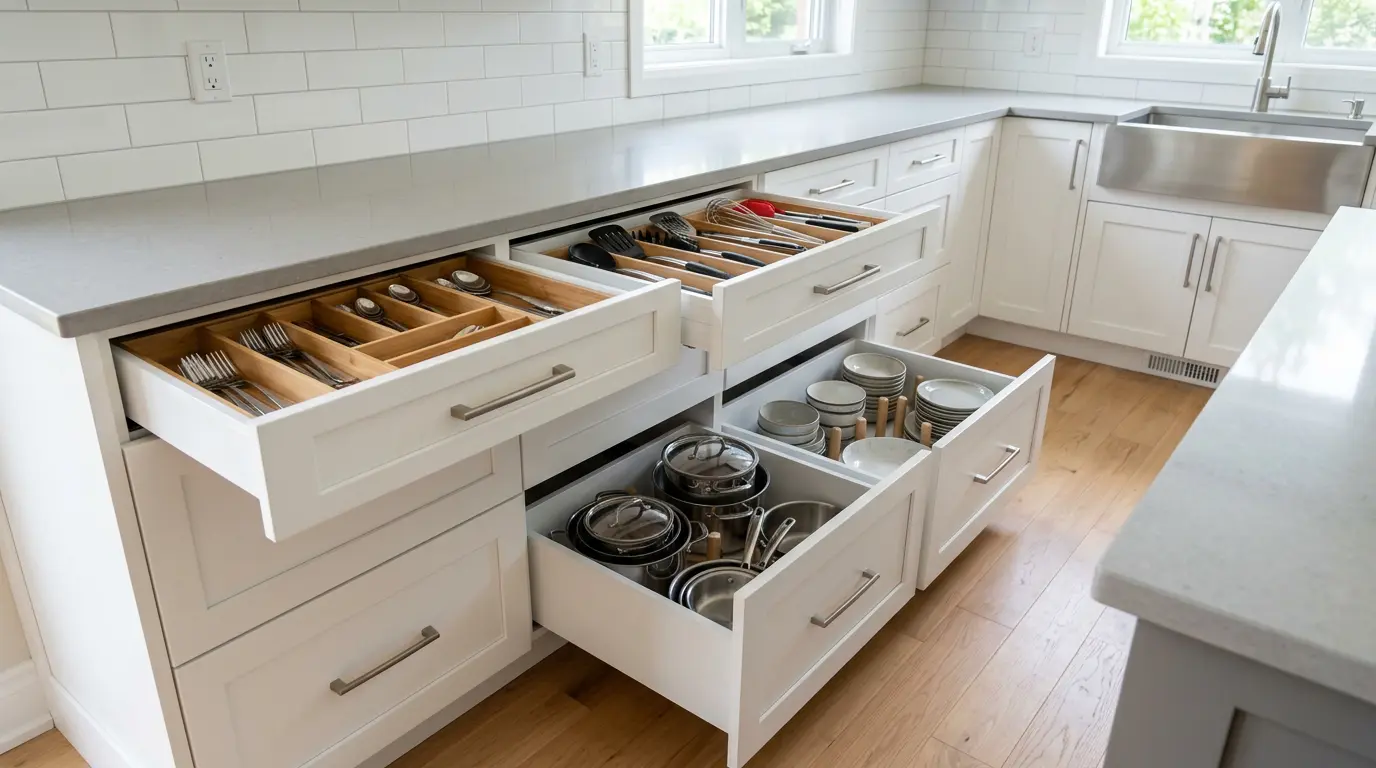
There isn’t one perfect number, but most kitchens benefit from more drawers than they currently have. Once homeowners switch to a more drawer-focused layout, they usually notice the improvement right away. Things are easier to reach, easier to organize, and much less likely to get buried.
A well-planned kitchen often uses drawers for a large portion of the base cabinetry. Deep drawers are ideal for pots, pans, and mixing bowls. Medium-depth drawers work well for dishes and storage containers. Shallow drawers are useful for utensils, tools, and smaller everyday items.
The goal isn’t just to add drawers for the sake of it. It’s to give everything a spot that actually makes sense.
When drawers are planned around how you use the kitchen, the whole space tends to feel more organized and more efficient.
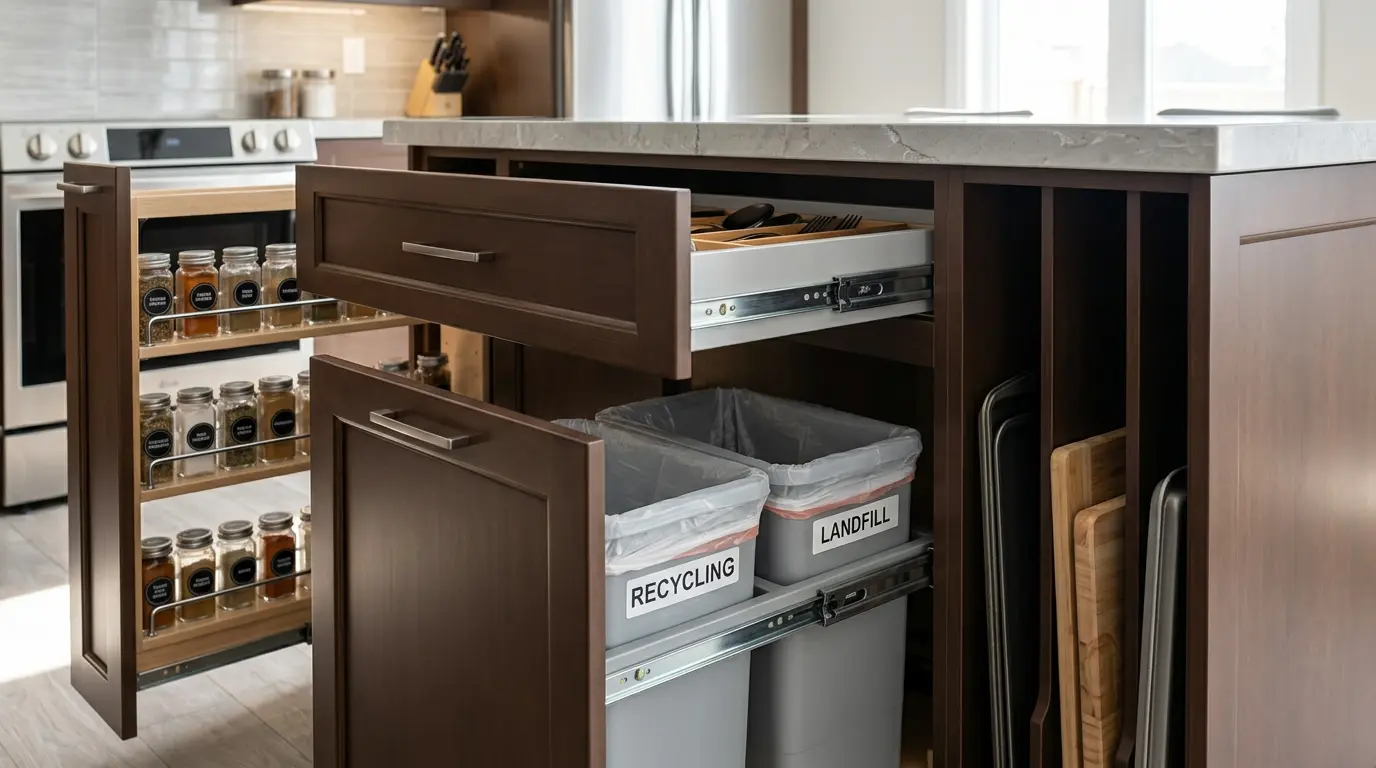
The best cabinet features are usually the ones that make small daily tasks feel simpler. Things like deep drawers, full-extension pull-outs, built-in garbage and recycling, tray dividers, pantry pull-outs, and soft-close hardware can have a big impact on how the kitchen feels to use.
These aren’t flashy upgrades, but they’re the ones homeowners tend to appreciate long after the renovation is done.
Soft-close hardware makes the kitchen quieter and reduces wear over time. Full-extension slides let you reach the back of a drawer without guessing what’s in there. Built-in waste and recycling storage keeps the room cleaner and more organized.
The key is to choose features based on how you actually live — not just what looks impressive in a showroom photo.
Cabinet Style, Colour and Design Questions
Shaker, flat-panel, slim shaker, and raised-panel styles are among the most popular choices, but shaker continues to stand out as the most versatile. That’s because it works well in so many types of homes. The same shaker door can feel classic, modern, transitional, or somewhere in between depending on the finish, hardware, and surrounding materials.
Flat-panel cabinets are another strong choice, especially for contemporary or minimalist kitchens. They offer a cleaner, simpler look that pairs well with sleek finishes and modern layouts.
One reason these styles remain so popular is that they don’t feel tied to one moment in time. They give homeowners flexibility, which is especially valuable when you want a kitchen that still feels right years from now.
Simple styles tend to last the longest, which is why shaker and flat-panel doors are usually the safest long-term choices. They have clean lines, balanced proportions, and a look that isn’t overly tied to one specific trend. That matters when you’re making an investment you want to feel good about for years.
More ornate door styles, heavy mouldings, or trend-driven details can look impressive at first, but they often date more quickly. A simpler cabinet style gives you more flexibility if your tastes evolve or the rest of the room gets updated later.
Timeless design usually comes down to restraint. When the cabinet style is clean and well-proportioned, it’s much easier for the kitchen as a whole to age gracefully.
The main difference is in how the cabinet box is built. Framed cabinets have a face frame attached to the front of the cabinet box. That frame adds a more traditional look and gives the front of the cabinet extra structure.
Frameless cabinets skip that face frame altogether. The doors and drawers attach directly to the cabinet box, which creates a cleaner, more modern appearance and gives you slightly more usable interior space.
In practical terms, framed cabinets often feel a bit more classic, while frameless cabinets lean more contemporary. Both can be built well and both can last a long time when quality materials and hardware are used.
One practical consideration: frameless cabinets typically rely on concealed European-style hinges and require more precise construction tolerances to look right, which can affect hardware cost and installation time. So the better choice usually comes down to the look you prefer, your budget for hardware, and how you want the kitchen to feel overall.
White continues to be the most popular cabinet colour, and for good reason. It works with almost any countertop, backsplash, flooring, or hardware choice, and it helps the kitchen feel bright and open.
Natural wood tones have also become much more popular, especially lighter options like white oak and maple. They bring warmth into the room and create a softer, more grounded look.
Soft greys, warm off-whites, and two-tone kitchens are also common choices because they strike a nice balance between timeless and current.
Part of what makes these colours so popular is flexibility. They tend to work well over time, photograph well, and make it easier to update the rest of the kitchen later without needing to change the cabinets.
Yes — very much so. White cabinets have remained popular for years because they’re easy to live with, easy to pair with other materials, and hard to date. They reflect light well, which helps the kitchen feel brighter and more open, especially in smaller spaces.
They also give homeowners a lot of flexibility. You can pair white cabinets with warm wood, black hardware, brass fixtures, bold backsplashes, or simple neutral finishes and still end up with a cohesive result.
One thing to keep in mind with white painted cabinets is that the finish quality matters more than with darker colours, because imperfections, dust, and grease splatter are more visible. A well-applied professional finish makes a significant difference in how white cabinets look and wear over time.
Even though design trends come and go, white continues to hold its place because it works in real homes. It isn’t just a trend — it’s a reliable choice that tends to age well.
No — white cabinets are not going out of style. What has changed is that homeowners now feel more confident exploring other options too. Natural wood tones, deeper colours, and two-tone kitchens have all become more common, but that hasn’t pushed white out of the picture. Industry trend data from major cabinet manufacturers and design platforms consistently shows white remaining among the top-requested colours year after year.
White remains one of the safest and most flexible choices you can make. It works across a wide range of cabinet styles and makes it easy to refresh the rest of the kitchen over time — for example, you can swap hardware, change a backsplash, or update countertops without worrying about clashing with the cabinets.
If you’re concerned that white might feel too plain or too common, that usually comes down to how the kitchen is finished around it. Countertops, hardware, lighting, and accent colours all help shape the personality of the space.
So while white may not be the only popular option anymore, it’s still one of the strongest long-term choices available.
Yes — and in many homes, they already have. Wood-tone cabinets have become much more popular over the last several years, especially in kitchens that aim to feel warm, natural, and less stark than an all-white design.
Lighter woods like white oak and maple are especially popular, but richer tones like walnut and cherry still have a place depending on the style of the home.
Part of the appeal is that natural wood adds texture and character in a way painted finishes can’t. It helps the kitchen feel more grounded and lived-in, while still looking polished.
The trade-off is that wood tones often show more natural variation and may require a little more care. But for many homeowners, that warmth and authenticity are exactly what make them worth choosing.
They can, but they don’t have to. A kitchen with matching upper and lower cabinets can look classic, calm, and cohesive. But a two-tone approach can also work beautifully when it’s done with intention.
One of the most common combinations is lighter uppers with darker or wood-tone lowers. That helps keep the room feeling open while adding depth and contrast lower down.
Two-tone kitchens are popular because they add visual interest without making the room feel busy. They can also help highlight an island or break up a large wall of cabinetry.
The key is making sure the colours relate well to each other and to the rest of the room. When that balance is right, the finished kitchen feels thoughtful rather than trendy.
Lighter colours usually work best in smaller kitchens because they reflect more light and help the space feel more open. White, soft off-white, pale grey, and light wood tones are all popular choices for that reason. They make the room feel brighter and less visually crowded.
That said, a small kitchen doesn’t have to be all light to work well. In some cases, a darker lower cabinet paired with light uppers can add contrast without closing the room in.
The size of the kitchen matters, but so does lighting, finish sheen, and how much visual clutter is in the space. Colour is important, but it’s only one part of what makes a small kitchen feel bigger and easier to live in.
Mid-tone colours and natural wood finishes tend to be the most forgiving in everyday life. They do a better job of hiding fingerprints, light scuffs, dust, and minor wear than very dark colours or very bright finishes. Matte and satin finishes also tend to be easier to live with than high-gloss surfaces.
Dark glossy cabinets can look dramatic, but they usually show everything. Very light finishes can also show grease or splatter more easily in busy cooking zones.
If low maintenance matters to you, a mid-tone cabinet colour with a softer finish is often the easiest choice to keep looking clean. It’s one of those decisions that can make a noticeable difference once the kitchen is in daily use.
Brushed brass, matte black, and brushed nickel continue to be some of the most popular hardware finishes, and each brings a different feel to a kitchen.
Brushed nickel is often the safest choice because it works with almost anything and tends to age well. Matte black is popular in more modern or two-tone kitchens, while brushed brass adds warmth and pairs especially well with wood tones and softer neutrals.
In terms of shape, simple bar pulls remain a favourite because they’re practical, easy to grip, and work well on both drawers and doors. Knobs still have their place, especially in more traditional spaces, but many homeowners find pulls more comfortable for everyday use.
Hardware trends do change faster than cabinet styles, so it usually makes sense to choose something classic and functional rather than overly trendy. The nice thing is that hardware is one of the easiest things to update later if your taste changes.
The best hardware choices usually come down to simplicity, comfort, and compatibility with the rest of the kitchen. A finish that works with your cabinet colour, countertop, faucet, and lighting will almost always age better than something chosen just because it’s popular right now. Brushed and satin finishes are especially forgiving because they tend to hide fingerprints and small scratches better than polished surfaces.
Shape matters too. Simple knobs and clean bar pulls usually hold up better over time than oversized or highly stylized pieces that can feel tied to a specific trend.
It also helps to think about feel, not just appearance. Hardware should be comfortable to use every day and proportionate to the size of the door or drawer it’s on. If it feels good in your hand and looks balanced on the cabinet, that’s usually a strong sign you’re making the right choice.
Not exactly — but they should feel like they belong together. A kitchen doesn’t need every metal finish to match perfectly. In fact, a little variety can make the space feel more layered and intentional. What matters most is that the finishes coordinate well and don’t compete with each other.
For example, mixing brushed nickel with matte black can work beautifully in the right kitchen. Mixing polished chrome with antique bronze usually feels less natural unless the overall design is carefully planned around it.
The goal isn’t strict matching. It’s balance. When the finishes relate well in tone and style, the kitchen feels cohesive without looking overly staged.
Not necessarily. Many homeowners still prefer traditional knobs and pulls because they’re familiar, practical, and easy to use. But there are other options, especially in more modern kitchens.
Integrated handle profiles, often called handleless or J-pull styles, create a cleaner look by building the grip into the door itself. Push-to-open systems are another option if you want the smoothest possible look.
The trade-off is that these styles change the way the kitchen feels to use. They can look sleek and minimal, but they may take a little getting used to, and they sometimes require more cleaning around touch points or profile grooves.
So no, you don’t need visible hardware on every cabinet. It really comes down to the look you want and how you prefer the kitchen to function day to day.
A timeless kitchen usually feels balanced, simple, and well suited to the home it’s in. That often means choosing cabinet styles with clean lines, colours that won’t feel tied to a particular year, and finishes that feel natural rather than overly decorative. Shaker and flat-panel doors are strong examples because they’ve stayed relevant through many different design cycles.
Timeless kitchens also tend to avoid doing too much all at once. Instead of relying on bold statement features in every direction, they build around good proportions, practical layout decisions, and a few carefully chosen details.
Trends can still have a place, but they’re often better added through things that are easier to change later, like lighting, paint, or hardware. When the cabinetry itself is simple and well designed, the kitchen usually has a much better chance of feeling right for years to come.
Cabinet Materials and Durability Questions
Cabinets are usually made from a combination of materials rather than just one. The cabinet box, the doors, the drawer fronts, the shelves, and the interior components all do different jobs, so they’re often made from different materials for practical reasons.
Common box materials include plywood, HDF (high-density fiberboard), MDF, and particleboard. Doors and drawer fronts may be solid wood, HDF, MDF, veneer, or thermofoil, depending on the finish and price point. HDF is denser and more stable than MDF, making it a good choice for painted finishes and high-moisture areas.
That’s why material choice isn’t really about finding one “best” option for everything. It’s about choosing the right material for each part of the cabinet based on how it will be used.
A well-built cabinet usually comes from good decisions across the whole system — not just one premium material in one area.
For cabinet boxes, plywood is usually the better long-term choice. It holds screws more securely, handles moisture better, and tends to stay stronger over time, especially in kitchens where humidity and daily wear are part of normal life. That’s a big reason why many custom cabinet makers prefer it.
Particleboard is less expensive, and it can work in some settings, but it’s more vulnerable to swelling and damage if moisture gets in. Once that happens, it tends to lose strength quickly.
The difference may not be obvious on day one, but it becomes much more noticeable over time — especially around sinks, dishwashers, and other areas where moisture is harder to avoid.
MDF is an engineered wood product made from very fine wood fibres compressed into dense, smooth panels. One of its biggest strengths is how well it takes paint. Because it has no visible grain and a very uniform surface, it creates a clean painted finish that many homeowners prefer for cabinet doors.
That’s why MDF is often used for painted doors, drawer fronts, and decorative panels. It gives a smooth result that can be harder to achieve with natural wood, especially if you want a crisp, modern finish.
Its main weakness is moisture. MDF does not handle water exposure as well as plywood, which is why it’s usually better suited to the visible door components than to cabinet boxes in wetter areas.
For improved durability, especially in kitchens with higher moisture exposure or where edge durability matters, HDF (High-Density Fiberboard) is available as a premium alternative to standard MDF. HDF is denser and more resistant to moisture and impact than MDF, making it a better choice for painted doors in kitchens near sinks or dishwashers, or in homes where edge chipping is a concern. The trade-off is slightly higher cost, but many homeowners find it worthwhile for long-term performance.
HDF stands for High-Density Fiberboard, and it’s essentially a more densely compressed and engineered version of MDF. While MDF is made from wood fibres at a specific density, HDF is pressed at higher pressure and density, creating a harder, more durable product.
The main advantages of HDF over standard MDF include:
Moisture Resistance: HDF handles humidity and water exposure better than MDF. In kitchens where moisture is a concern—near sinks, dishwashers, or in naturally humid homes—HDF maintains its structural integrity longer. This is especially valuable in Ontario kitchens, where seasonal humidity swings can be significant.
Edge Durability: HDF’s denser composition means edges are less prone to chipping, cracking, or degrading from impact. If you have children, frequent kitchen activity, or expect heavy daily use, HDF doors will maintain their appearance better than standard MDF doors over time.
Impact Resistance: HDF resists denting and damage from normal kitchen wear and tear better than MDF. For busy households or commercial applications, this matters.
Paint Adhesion: HDF takes paint just as well as MDF and holds the paint finish longer, especially on edges and high-wear areas.
Cost Trade-Off: HDF typically costs 10-20% more than standard MDF. For most residential kitchens, standard MDF with a quality paint finish is adequate. However, for kitchens with higher moisture exposure, high traffic, or situations where the doors will be in constant use, HDF is often worth the upgrade.
When to Choose HDF:
- Cabinets positioned directly adjacent to or immediately flanking the sink
- Kitchen islands that see constant family activity
- Homes in very humid climates or with moisture issues
- High-traffic commercial applications (restaurants, offices)
- When you plan to live in the home 20+ years and want maximum durability
- When the cabinets are painted and show-facing, where edge durability is visible
When Standard MDF is Sufficient:
- Cabinets in dry areas away from moisture sources
- Upper cabinets with less frequent use
- Interior-facing cabinet components (backs, sides)
- Projects with tight budgets where every dollar matters
Ontario Insight: In many older Ontario homes with basements that get damp or in newer homes with open-concept kitchens where cooking humidity spreads throughout the space, HDF doors for the primary work-zone cabinets (sink surround, cooking area) can add years to the lifespan of the painted finish. It’s one of those upgrades that homeowners often appreciate 15-20 years into living with the cabinets.
For painted cabinet doors, MDF is often the preferred material. The reason is simple: it creates a very smooth surface, with no grain lines showing through the paint. That helps painted doors look cleaner and more consistent, especially in lighter colours and more refined finishes.
Solid wood can also be painted, but wood naturally expands and contracts with seasonal humidity changes. In Ontario, where indoor humidity can shift quite a bit between winter and summer, that movement can sometimes lead to visible lines, cracks, or paint stress over time.
That’s why many cabinet makers use MDF or other stable engineered materials for painted doors, often with wood edging where needed. When combined with a good finish system, it usually gives the most consistent long-term result.
However, one consideration worth noting: MDF edges can be more vulnerable to chipping on impact than solid wood edges, which is why some cabinet makers use hardwood edging on MDF doors for added durability in high-traffic areas.
For homeowners who prioritize durability over cost, HDF (High-Density Fiberboard) is an excellent upgrade option. HDF is significantly denser than standard MDF, making it more resistant to moisture, edge damage, and impact. In kitchens where the painted doors are near the sink, dishwasher, or frequently used prep areas, HDF can outlast standard MDF by many years. It also resists edge chipping better and holds up better to the wear and tear of daily use. The cost is typically 10-20% higher than MDF, but for doors that will see heavy use, many homeowners consider it a worthwhile investment in longevity.
If you want a stained or clear-coated finish that shows natural grain, real wood is usually the best choice. Species like maple, oak, walnut, cherry, birch, and alder all have their own look, texture, and colour variation. The right one depends on the style you want, your budget, and how much visible grain you like.
Maple is a common choice because it’s durable, widely available, and takes stain well. Oak has a more pronounced grain, which some homeowners love and others prefer to avoid. Walnut and cherry tend to feel richer and more premium, but they also come at a higher cost.
A stained finish is really about highlighting the character of the wood itself, so choosing the right species matters just as much as choosing the stain colour.
Not necessarily. High-quality custom cabinets use different materials for different reasons. A plywood box with a well-finished MDF painted door is a very strong combination that can outperform a solid wood cabinet of lower construction quality. The build method and finishing matter as much as the material.
Solid wood is valuable in the right places, especially when you want visible grain, warmth, and a natural look. But that doesn’t mean every part of a cabinet should automatically be solid wood.
In many cases, high-quality custom cabinets perform better when different materials are used for different purposes. For example, a plywood cabinet box paired with a painted MDF door can be a very strong and durable combination.
Solid wood also moves more with seasonal humidity changes, which can be a drawback in some applications. So while it has clear advantages, it isn’t automatically the best choice for every part of the cabinet.
What matters more is how well the cabinet is designed and built as a whole.
Construction method, joinery quality, the material used for the cabinet box, the finish system, hardware quality, installation precision, and day-to-day care all affect how long cabinets hold up. A well-installed cabinet of moderate materials will often outlast a poorly installed premium one. Choosing the right engineered wood product—whether MDF, HDF, or plywood—for each component also affects long-term performance.
Cabinet durability comes from the whole build, not just one feature. Materials matter, but so do joinery, hardware quality, finish system, installation, and even how the cabinets are used and maintained over time. A well-built cabinet made from sensible materials will usually outlast a poorly built cabinet made from premium ones.
For example, quality hardware makes a big difference in how smoothly doors and drawers keep working year after year. A durable finish protects the surface from grease, moisture, and everyday wear. Good installation ensures the cabinets sit properly and function the way they should from the start.
Material choice within engineered wood categories also matters. For painted doors, choosing HDF instead of standard MDF can extend the cabinet’s practical lifespan, especially in moisture-prone or high-traffic kitchens. For cabinet boxes, plywood outperforms particleboard. These choices don’t necessarily require premium materials everywhere—they’re about putting the right material in the right place for the job it needs to do.
So when you’re thinking about durability, it helps to look at the entire package rather than focusing on a single material or feature. A cabinet made from carefully chosen materials—plywood boxes, HDF painted doors, quality hardware, and a professional finish—will perform far better over 20-30 years than a cheaper cabinet with corners cut everywhere.
Yes — in many cases, they matter just as much. The finish is what protects the cabinet surface from moisture, grease, cleaning products, and normal daily wear. If the finish breaks down too quickly, the material underneath becomes exposed and more vulnerable to damage.
A well-applied finish helps cabinets stay looking better for longer, but it also plays a big role in how they hold up in real kitchen conditions. That’s especially important near sinks, dishwashers, and cooking areas where surfaces are under constant stress.
So while the material underneath matters, the finish is what stands between that material and everyday life. Both need to be chosen well.
In many cases, yes. Darker cabinets tend to show fingerprints, dust, water spots, and smudges more easily than lighter finishes, especially if the surface has more sheen. That doesn’t mean dark cabinets are a bad choice — just that they usually need a bit more regular upkeep to keep looking their best.
A matte or satin finish can help a lot. It softens reflections and makes everyday marks less noticeable than a glossy surface would.
So if you love the look of dark cabinetry, it’s absolutely possible to make it work. It just helps to go into the decision knowing that the maintenance side is a little different.
For most households, mid-tone colours in a satin or matte finish are the easiest to live with. They tend to hide fingerprints, dust, and light wear better than very dark finishes or very glossy surfaces. They also strike a nice balance between looking clean and not showing every small mark.
That said, the easiest finish for one home may not be the easiest for another. A busy family kitchen, for example, has very different demands than a quieter home with less daily wear.
The best choice usually comes from being honest about your lifestyle. If low maintenance matters to you, it makes sense to choose a finish that’s forgiving in real life — not just one that looks great in photos.
For the cabinet box, plywood performs significantly better than particleboard near moisture. Particleboard can swell and soften if water gets into the seams or base. For door surfaces, thermofoil can peel at the edges over time when exposed to heat or steam near the stove. A quality lacquer or painted finish on HDF or solid wood holds up better in high-heat and high-moisture zones than standard MDF or thermofoil. Avoid particleboard boxes and thermofoil doors in the cabinet run immediately adjacent to the stove or sink.
Areas near the sink and stove are some of the hardest-working zones in the kitchen, so materials matter even more there.
For cabinet boxes, plywood is usually the stronger choice because it handles moisture better than particleboard. Particleboard can swell and soften if water gets into the seams or base, which is a real risk near sinks where slow leaks sometimes go unnoticed. That’s especially important near the sink, where splashes, leaks, and humidity are harder to avoid over time.
For doors and exposed surfaces near the stove, thermofoil should generally be avoided—it can peel at the edges when exposed to repeated heat or steam. A quality lacquer or painted finish on solid MDF or wood holds up better in high-heat zones.
For cabinets in both high-moisture and high-heat zones, HDF (High-Density Fiberboard) is an excellent material choice. HDF is more moisture-resistant than standard MDF, more heat-resistant than thermofoil, and more durable under impact than either. If your kitchen has cabinets positioned immediately adjacent to the sink and stove—a common situation where both moisture and heat are challenges—specifying HDF doors and plywood boxes in those areas will significantly improve long-term performance. While it costs more than standard MDF or particleboard, the durability gains are especially worthwhile in zones that will see the most wear.
It also helps to think about small protective details, like under-sink liners or extra sealing inside the sink cabinet. Those choices may not be visible, but they can make a real difference in long-term durability.
Well-built kitchen cabinets can last a very long time — often 20 to 50 years, and sometimes longer. Where they fall in that range depends on the materials, the construction quality, the finish, and how they’re used and maintained over the years. Cabinets that are carefully built and properly installed tend to stay functional far beyond what many homeowners expect.
In some cases, the finish may need refreshing before the cabinet structure itself wears out. In others, the cabinets are still solid but feel dated because tastes and styles have changed.
That’s why cabinet lifespan is really about two things: how long they physically hold up, and how long you still want them in the room. A durable, timeless design helps with both.
Yes — if the cabinets are in good shape and the layout still works, painting can be a very practical option. Painting is often the most cost-effective way to change the look of a kitchen without replacing the cabinetry. It can freshen the space significantly, especially when the doors and cabinet boxes are still structurally sound. Professional cabinet painting in Ontario typically costs a fraction of full replacement — often in the range of a few thousand dollars depending on the size of the kitchen and the quality of the finish.
What painting does not do is change the door style, improve the layout, or solve deeper structural issues. If the cabinets are damaged, warped, or water-swollen, paint won’t fix those problems. You may want to consider other options like refacing.
It’s also important to note that DIY cabinet painting rarely produces the same result as a professional job — proper sanding, priming, and application make a significant difference in durability and finish quality.
So painting works best when your goal is mainly cosmetic. If you like the layout and just want a cleaner, updated look, it can be a smart step.
Yes — and that’s one of the main ideas behind cabinet refacing. If the existing cabinet boxes are still in good condition, you can replace the doors and drawer fronts while keeping the main structure in place. That gives the kitchen a much more updated look without the cost and disruption of replacing everything.
This approach works well when the layout already functions the way you want and the cabinets themselves are still sound. It’s often one of the most practical ways to make a noticeable visual change without taking on a full renovation.
The biggest limitation is that you’re still working with the existing layout. So while the look can change dramatically, the underlying organization of the kitchen will stay mostly the same.
Solid box construction, good joinery, a durable finish, well-chosen hardware, thoughtful storage design, and professional installation. Quality custom cabinets should feel like they were made specifically for the room they are in — because they were.
High-quality cabinets usually feel solid, smooth, and intentional in ways that are hard to fake. You notice it in the details: doors and drawers line up properly, gaps are even, finishes feel smooth, hardware works quietly, and everything opens and closes the way it should.
You also feel it in daily use. Drawers glide cleanly, shelves don’t flex under normal weight, and nothing feels loose, flimsy, or rushed. Even when the difference isn’t obvious at first glance, it becomes very clear over time.
In the end, quality is really the result of many smaller things being done well — materials, joinery, finish, hardware, and installation all working together.
Cabinet Refacing Questions
Cabinet refacing updates the visible exterior of existing cabinets — new doors, drawer fronts, and veneers applied to the exposed box surfaces — while keeping the existing cabinet structure in place. The result looks like new cabinetry without the cost or disruption of a full replacement.
Kitchen refacing gives you a new look without rebuilding the entire kitchen. Instead of removing all the cabinet boxes, refacing keeps the existing structure in place and updates the parts you actually see — usually the doors, drawer fronts, hardware, and the visible surfaces of the cabinet boxes.
That’s why it can make such a dramatic visual difference with less disruption than a full replacement. From the outside, the kitchen can look almost completely new, even though the main cabinet framework stays where it is.
Refacing works best when the boxes are still in good shape and the current layout already works for your household. If those two things are true, it can be one of the most efficient ways to refresh the space.
In the Niagara region, cabinet refacing usually falls somewhere in the $5,000 to $15,000 range, depending on the size of the kitchen and the choices you make along the way. The biggest factors are usually door style, finish, hardware, and whether you’re adding extras like soft-close hinges, pull-out shelves, or interior updates. A smaller, simpler kitchen will land at the lower end, while a larger kitchen with premium finishes or added features will cost more.
One reason refacing appeals to so many homeowners is that it delivers a major visual update without the cost of replacing all the cabinet boxes. That makes it a practical middle-ground option for kitchens that still function well but feel dated.
The best way to get an accurate number is always to look at the actual space, because scope matters just as much as square footage.
Yes — in most cases, refacing costs quite a bit less than full replacement. That’s because you’re keeping the existing cabinet boxes instead of tearing everything out and starting over. You avoid demolition, disposal costs, new box materials, and a large portion of the labour involved in a full cabinet install. Using the typical Ontario price ranges — roughly $5,000 to $15,000 for refacing versus $15,000 to $40,000 or more for custom replacement — the savings generally fall in the 40 to 60 percent range, though the exact figure depends on the scope and materials involved in each approach.
For homeowners whose layout still works well, that can make refacing a very smart investment. You get a fresh, updated look without paying for changes you may not actually need.
The key question is whether the cabinets are still structurally sound and whether the kitchen works well as it is. If the answer to both is yes, refacing often gives you the best balance of cost and impact.
One of the biggest advantages of refacing is how quickly it can be completed. Most professional refacing projects take about 3 to 5 days, which is much faster than a full cabinet replacement. Because the cabinet boxes stay in place, there’s no major demolition and far less disruption overall.
That shorter timeline matters a lot for families who still need to live in the home and use the kitchen as much as possible during the project. In many cases, refacing is simply easier to manage day to day.
Exact timing depends on the size of the kitchen and whether you’re adding upgrades, but compared to a full replacement, refacing is usually the much faster path.
It is — when the kitchen still works well and the cabinet boxes are in good condition. Refacing is often worth it for homeowners who are happy with the layout but want to improve the look of the space. If the main issue is that the cabinets feel dated, worn, or no longer match your style, refacing can solve that without the cost of starting over.
What it doesn’t do is fix a poor layout or damaged cabinet structure. So the real value depends on whether the problem is cosmetic or functional. A good way to test this: if your frustrations are mostly about appearance — the colour, the door style, the overall feel — refacing is likely a strong fit. If your frustrations are about where things are, how the room flows, or whether cabinets are physically failing, replacement is the better path.
When refacing is the right fit, it can also be paired with functional upgrades like soft-close hardware and pull-out shelves, which can make the kitchen feel noticeably better without a full rebuild.
Cabinets should usually be replaced when the issues go deeper than appearance. If the boxes are water-damaged, warped, swollen, or no longer structurally sound, refacing won’t solve the real problem. The same is true if the layout doesn’t work for your household and you want to change where things go.
Refacing is a surface update. It can make the kitchen look very different, but it can’t correct serious damage or redesign how the room functions.
So if your frustration is mostly about style, refacing may be enough. If it’s about layout, structure, or long-term performance, replacement is usually the better investment.
Good candidates for refacing usually have two things in common: the boxes are still in good shape, and the layout still works. That means no major water damage, no swelling, no warping, and no structural issues that would make it risky to build on what’s already there. It also means you’re reasonably happy with how the kitchen functions day to day.
If the main goal is to update the style, finish, or overall look, those are strong signs that refacing could be a good fit.
A professional assessment is always the best way to confirm it, but in general, sound boxes and a workable layout are what make refacing possible.
No — refacing keeps the existing cabinet positions in place. That means it can change the look of the kitchen, but not the underlying layout. The sink, stove, appliance locations, and overall cabinet arrangement all stay where they are unless you move into a full replacement project.
This is one of the most important things to understand before choosing refacing. It works best for kitchens that already function well and simply need a style update.
If your goal is to open up the room, move appliances, improve flow, or change how the kitchen works, refacing won’t be enough on its own. Layout changes often involve moving plumbing, electrical, or gas lines, which typically require permits in Ontario and add both cost and coordination to the project.
Quite a few useful upgrades can be added during a refacing project, depending on the condition of the cabinets and the scope of work. Common additions include soft-close hinges, updated hardware, pull-out shelves, improved pantry storage, built-in garbage and recycling, and better interior organization. In some cases, under-cabinet lighting or shelf updates can also be worked into the project.
This is one of the reasons refacing can feel like more than just a cosmetic improvement. Even if the layout stays the same, small functional upgrades can make the kitchen noticeably easier to use.
The best upgrades are usually the ones that improve your everyday routine, not just the ones that look good in photos.
Yes — for most homeowners, refacing is much easier to live through than a full replacement. Because the cabinet boxes stay in place, there’s less demolition, less mess, and a much shorter timeline. Most refacing projects take 3 to 5 days, compared to several weeks for a full replacement. In many cases, parts of the kitchen remain usable throughout the process, which makes a big difference for busy households.
A full replacement often means the kitchen is largely out of commission for a longer stretch, especially if plumbing, electrical, or other trades are involved. Refacing usually avoids most of that because no structural, plumbing, or electrical work is needed.
So if minimizing disruption is a priority — especially for families with young children or homeowners who work from home — refacing has a clear advantage.
Sometimes they can, but it depends on the condition of the cabinets and what’s already been done to them. If the boxes are still solid and the surfaces can properly accept new materials, a second refacing may be possible. But that isn’t always the case. Over time, wear, moisture, and previous layers of material can make another refacing less practical.
At that stage, a professional assessment becomes especially important. Some kitchens are still good candidates, while others are better off being replaced instead of updated again.
So the short answer is yes, sometimes — but it really depends on what’s underneath.
Neither option is automatically better. It depends on what your kitchen actually needs. Refacing is often the better choice when the cabinet boxes are in good condition, the layout still works, and the goal is mainly to update the look. In Ontario, refacing typically costs 40 to 60 percent less than full replacement and can be completed in days rather than weeks. Replacement is the better option when the kitchen has structural issues, layout problems, or storage needs that can’t be solved by updating surfaces alone.
In other words, the right choice usually becomes clear once you decide whether your problem is mostly cosmetic or mostly functional. If you can point to specific layout frustrations — things like the sink being too far from prep areas, or not enough counter space near the stove — those usually signal a replacement project. If the frustrations are mainly about appearance and you’d just like a more current look, refacing is often the smarter investment.
For the right kitchen, refacing can be an excellent solution. For the wrong kitchen, it can feel like a temporary fix.
Yes — within limits. Refacing doesn’t allow you to change the actual cabinet layout, but it can still be a good time to add practical improvements. Features like soft-close hardware, pull-out shelves, better organizers, lighting, and updated storage accessories are often realistic additions during the project.
These kinds of upgrades can make a big difference in how the kitchen functions, even if the cabinet positions stay the same.
The important thing is understanding the difference between improving what’s there and redesigning the room. Refacing is very good for the first one, but not the second.
Painting changes the colour of your existing cabinets. Refacing changes the visible exterior much more completely. With painting, the door style stays exactly the same. If you have an older raised-panel door, it will still be that same door — just in a new colour. That can be a great option if the cabinets are in good shape and you still like the overall style.
Refacing goes further. It replaces the doors and drawer fronts, applies a matching finish or veneer to visible box surfaces, and gives the kitchen a more complete visual transformation.
So if you only want a colour update, painting may be enough. If you want to change both the style and the finish without replacing the full kitchen, refacing usually makes more sense.
The first questions should always be about condition and function. Are the cabinet boxes still solid? Does the layout still work for your household? Will refacing actually solve the problem you’re trying to fix?
Once those answers are clear, it makes sense to ask about materials, finish options, hardware, warranty coverage, and what upgrades can be included. It’s also worth asking how the contractor handles unexpected issues if they find damage once the project starts.
A good refacing project starts with a clear understanding of what’s possible — and what isn’t.
Not sure whether to reface or replace?
Send Chase Cabinetry photos of the your current cabinets. We may be able tell you quickly whether refacing makes sense for your kitchen, or whether replacement is the better investment.
Call to start a conversation, email your photos or schedule a free in-home consultation to get an expert opinion.
Built-ins and Bathroom Vanity Questions
Custom built-ins are storage features designed specifically for a room, wall, or awkward space rather than bought as freestanding furniture. Because they’re made to fit the exact dimensions of the home, they usually look more seamless and intentional than off-the-shelf pieces. They can also make much better use of wall space, corners, alcoves, and other areas where standard furniture leaves gaps or wasted room.
Built-ins are especially useful when you want storage to feel like part of the home itself, not something added afterward. That’s a big reason they can make a room feel more polished and complete.
Built-ins make the biggest difference in rooms where storage needs to work hard and look intentional at the same time. Living rooms, mudrooms, home offices, and laundry rooms are some of the most common examples. In those spaces, freestanding furniture often leaves awkward gaps or doesn’t fully solve the storage problem.
A custom built-in can be designed around exactly what the room needs — whether that’s media storage, filing space, closed cabinetry, wall-to-wall shelving, or practical organization for daily routines.
Mudrooms are a great example, especially in Ontario homes where coats, boots, bags, and winter gear all need a place to land. In a space like that, built-ins can have a very real impact on everyday life.
They are when the goal is long-term function, better organization, and a more finished look. Built-ins make the most sense in spaces where the layout is unlikely to change and where storage needs are ongoing. Because they’re custom made for the room, they often perform better than furniture and create a more cohesive result.
The trade-off is flexibility. Unlike furniture, built-ins stay where they are. So they’re usually a better investment for homeowners who plan to stay in the home and want something that feels permanent and well integrated.
If you value function and a tailored look more than the ability to rearrange the room later, built-ins are often worth it.
A mudroom built-in can be designed around exactly how your household comes and goes each day. That often includes a bench for sitting, shoe storage or cubbies underneath, hooks for coats and bags, upper cabinets for seasonal items, and individual sections for each family member if needed.
In Ontario, mudrooms often need to handle more than just shoes and jackets. Wet boots, winter gear, backpacks, umbrellas, sports equipment, and everyday clutter all tend to pass through the same space.
That’s why a well-designed mudroom built-in can make such a difference. It helps contain the mess, keeps things easier to find, and makes the entry area feel much more organized.
A living room built-in can be as simple or as detailed as the room needs. Some are designed around a fireplace or TV wall, with shelving on either side and closed cabinetry below. Others include full wall-to-wall storage, display shelves for books or decor, media compartments, or even window seats and surrounding cabinetry.
What makes built-ins so effective in a living room is that they combine function and visual impact. They can hide clutter, frame the room beautifully, and make the space feel more custom and complete.
In many homes, a well-designed built-in becomes one of the main focal points in the room.
It depends on what matters more to you: flexibility or fit. Built-ins usually give you a better fit, a more polished look, and storage that feels like it truly belongs in the room. Because they’re designed specifically for the space, they can solve problems that freestanding furniture often can’t.
Furniture, on the other hand, gives you more flexibility. You can move it, rearrange it, or take it with you if your needs change.
So built-ins tend to make the most sense in rooms where the layout is fairly permanent and you want storage that feels intentional. If you’re designing around a long-term use for the space, built-ins often create the better result.
Yes — and when they do, it can make the whole home feel more cohesive. If the goal is consistency, built-ins can be designed with the same door style, finish, and hardware as the kitchen, bathroom vanity, or other cabinetry in the home. That’s especially effective in open-concept spaces or homes where multiple rooms are visible from one another.
Matching doesn’t have to mean everything looks identical, but it does help the home feel more intentional and professionally designed.
When the same materials and finishes carry through different spaces, the overall result usually feels calmer, more refined, and more connected.
Yes. When that is the goal, custom built-ins can be designed with the same door style, finish, and hardware as other cabinetry in the home, creating a cohesive look throughout. This is a common approach in open-plan homes where the kitchen and living areas share a sightline.
A custom vanity is often the best way to make a bathroom feel like it truly fits the space. Off-the-shelf vanities come in set sizes, which can be limiting if your room has unusual dimensions, awkward plumbing locations, or tight clearances. A custom vanity allows you to work around those details instead of compromising because of them.
It also gives you more control over storage, height, depth, and overall style. That means you can design around how the bathroom is actually used, rather than just choosing whatever happens to be available in a catalogue.
In smaller or more difficult bathrooms, that flexibility can make a big difference.
Yes — often especially good for small bathrooms. In a tighter space, even a few inches can make a big difference. Standard vanities don’t always fit well, which can leave awkward gaps or take up more room than they should.
A custom vanity can be built to the exact width and depth the bathroom needs, which helps make the room feel more efficient and less crowded. It also lets you be much more strategic with storage, which matters even more when space is limited.
In small bathrooms, good design has less room for error — and that’s exactly where custom work tends to shine.
A custom vanity can include much more than a basic sink cabinet. Depending on the size of the bathroom and how you use it, storage can include full-depth drawers, divided organizers, under-sink storage solutions, open shelving, drawer inserts, and custom compartments for everyday items.
The most useful vanity storage is usually designed around what you actually keep there — things like toiletries, grooming tools, cosmetics, extra supplies, or towels. When those needs are built into the design from the start, the bathroom feels much easier to keep organized.
That’s the real advantage of custom vanity storage: it can be shaped around real life instead of generic assumptions.
Yes — that’s one of the main advantages of going custom. A vanity can be designed around the exact sink style, countertop material, plumbing setup, and overall room dimensions you plan to use. That helps everything fit together more cleanly and avoids the compromises that can happen when you mix standard vanities with non-standard tops or fixtures.
This is especially helpful with vessel sinks, undermount sinks, unusual countertop materials, or bathrooms where spacing is tight.
When the vanity, sink, and countertop are planned together from the start, the final result usually looks better and functions better too.
For most homeowners, drawers are easier to use. They make it much simpler to see what you have, reach daily items quickly, and keep smaller bathroom essentials organized. Doors still have a place, especially under the sink where plumbing gets in the way, but drawers often provide the better everyday experience.
A combination usually works best: drawers for the items you use often, and a cabinet section where extra space is needed around plumbing or cleaning supplies.
Just like in kitchens, bathroom storage tends to work better when it’s planned around visibility and access, not just basic shelf space.
Simple vanity styles usually age the best. Clean shaker profiles, flat-panel doors, and hardware with balanced proportions tend to hold up well over time because they aren’t too tied to a specific trend. They feel current now, but they also have a good chance of still feeling right years from now.
Bathrooms can date quickly when the vanity is overly ornate or heavily styled. That’s why many homeowners are better served by choosing a simple foundation and letting smaller details bring in personality.
A timeless vanity usually comes down to the same things as a timeless kitchen: clean lines, practical design, and finishes that don’t try too hard.
Yes — and it often makes sense to plan that storage at the same time. A vanity and adjacent linen tower, wall cabinet, or built-in storage unit can be designed together so the whole bathroom feels coordinated instead of pieced together over time. That usually creates a cleaner look and makes better use of the available wall space.
This is especially helpful in smaller bathrooms where every inch matters, but it can also make a big impact in larger bathrooms where you want the room to feel more finished and intentional.
When storage is planned as one complete solution, the bathroom tends to function better and look more cohesive.
Cost, Value and Decision Making Questions
Custom kitchen cabinetry in Ontario usually falls somewhere in the $15,000 to $40,000 range for a full kitchen, though the final number depends on the size of the space, the materials, the finish, the storage features, and how complex the installation is. Smaller or simpler kitchens land toward the lower end, while larger kitchens with premium materials or more detailed design work move higher.
That range can feel wide, but it reflects how many variables are involved. Cabinetry is one of the biggest investments in a kitchen renovation because it affects both how the room looks and how it functions every day.
The most accurate way to understand cost is always to price your actual space, since custom work is built around the room itself.
Complex layouts with many corners or angles, premium wood species such as walnut or cherry, painted finishes (which require more labour steps than stained), tall or deep cabinetry, specialty storage accessories, material upgrades like HDF doors or plywood boxes, and detailed finish work all add cost. Drawer-heavy layouts also cost more than door-and-shelf designs.
The biggest cost increases usually come from complexity. That can mean:
– Premium wood species (walnut, cherry) vs. maple or birch
– Painted finishes (more labour steps than stained)
– Material upgrades—choosing plywood over particleboard, or HDF over standard MDF
– Lots of drawers (more precise construction and hardware)
– Specialty storage accessories and organizers
– Taller or deeper cabinetry
– Detailed finish work
– Complex layouts with more corners, angles, or custom sizing
Some upgrades add cost because of materials, while others add cost because of labour. For example, a painted finish often takes more preparation and finishing work than a stained one. A drawer-heavy layout usually costs more than a door-and-shelf layout because of the added hardware and construction.
Material choices within the engineered wood category also affect cost. Choosing HDF doors instead of standard MDF might add $500-$2,000 to a full kitchen, depending on the number of doors. That upgrade is usually justified when you’re in a high-moisture area or planning for long-term durability, but it’s worth understanding the cost-benefit trade-off for your specific situation.
Understanding those cost drivers helps homeowners make better decisions. It gives you a clearer sense of where to invest and where it may make sense to keep things simpler.
Yes — in most cases, drawers do cost more. That’s because a drawer involves more construction and more hardware than a basic cabinet door. You need the drawer box itself, the drawer front, quality slides, and more precise installation to make everything work smoothly.
Doors are simpler by comparison. They typically require hinges and shelves, but not the same level of moving hardware or fine adjustment.
Even so, many homeowners still see drawers as one of the best places to invest. They usually make the kitchen easier to use, easier to organize, and more comfortable day to day — especially in lower cabinets.
Often, yes. A quality painted finish usually involves more steps, including sanding, priming, and multiple coats to achieve a smooth, even look. That extra labour is a big part of why painted cabinets often cost more.
Stained finishes also require careful prep, but the process is different because the goal is to highlight the natural character of the wood rather than cover it. The final cost can vary depending on the wood species and the finish system used.
In the end, the price difference comes down less to one finish being “better” and more to the amount of work needed to do each one well.
Yes — taller cabinetry usually costs more. That’s because more height means more material, more finishing work, and often more installation time. It can also mean custom-sized doors or added care during installation, especially if the walls or ceiling aren’t perfectly level.
Running cabinets to the ceiling can create a beautiful, built-in look and add valuable storage, but it does come with a price increase compared to standard-height cabinetry.
For many homeowners, it’s still worth considering — especially if they want the extra storage or a more custom appearance. It just helps to understand that height is one of the factors that can move the budget upward.
Usually, yes. Keeping the same layout often saves money because you avoid moving plumbing, electrical, gas lines, or structural elements. Those changes can add a lot to a renovation budget, even before the new cabinetry is installed.
That’s why many homeowners choose to improve the cabinet quality, storage design, and overall look while leaving the main kitchen footprint in place. It can still result in a major upgrade without the added cost of reworking the room.
If the current layout functions reasonably well, staying close to it is often one of the smartest ways to keep a project more manageable. It’s also worth noting that in Ontario, moving plumbing, electrical, or gas lines typically requires permits and licensed tradespeople, which adds both time and cost. Structural changes, such as removing or modifying load-bearing walls, require engineering review and building permits. These requirements aren’t obstacles — they’re there to protect you — but they are important to plan for if a layout change is on the table.
If you have to prioritize, cabinetry usually has the bigger impact on daily function. Countertops matter too, especially visually, but cabinets affect storage, workflow, organization, and how the kitchen feels to use every single day. A beautiful countertop can’t make up for a layout or storage plan that doesn’t work well.
That’s why many homeowners are better off investing in solid cabinet design and quality construction first, then choosing the best countertop option that fits what’s left in the budget.
The best way to stay on budget is to be clear about your priorities from the beginning. Decide what matters most — whether that’s better storage, stronger materials, a certain finish, or a specific style — and focus your budget there. It also helps to avoid adding complexity just for the sake of it. The more custom details, specialty features, and layout changes you include, the faster costs can climb.
Keeping the layout close to what already works, asking for an itemized quote, and understanding what each upgrade adds to the total can all make the project much easier to manage.
A good quote should help you make informed choices, not leave you guessing where the money is going.
For many homeowners, yes—especially if they plan to stay in the home for a long time. Custom cabinets offer a better fit, more tailored storage, and a result that’s designed around the actual room rather than a standard system. That usually means better day-to-day function and fewer compromises.
The value becomes even clearer over time. Custom cabinets built with quality materials—particularly plywood boxes and HDF or quality MDF doors with professional finishes—can last 20 to 50 years, compared to 10 to 25 years for many stock options. If you’re using the kitchen every day for years, the benefit of better organization, stronger materials, and a layout that works well adds up in a very real way.
Choosing the right materials in a custom build matters more than with stock cabinets. A custom cabinet maker can specify HDF for high-moisture zones, plywood for the structural box, and quality hardware throughout. Stock cabinets give you less control over those details, which is one reason they often don’t last as long.
The cost per year of use is often comparable to—or even lower than—a cheaper cabinet that needs replacing sooner. So while custom cabinets do cost more upfront, many homeowners find the long-term comfort, function, durability, and control over material quality make the investment worthwhile.
The cost of new kitchen cabinets depends on whether you’re refacing, replacing with stock or semi-custom, or going fully custom. In Ontario, refacing might fall in the $5,000 to $15,000 range, while custom replacement cabinetry is more often in the $15,000 to $40,000+ range depending on the kitchen size, materials, storage features, and installation complexity.
That range is broad because kitchens vary so much. A smaller kitchen with straightforward choices will cost much less than a large kitchen with premium finishes, more drawers, and detailed custom work.
That’s why estimates are most useful when they’re based on your actual room, rather than broad averages alone.
Kitchen updates consistently produce strong returns in resale. Updated cabinetry typically improves buyer interest and the perceived quality of the home. The actual return depends on the local market, the quality of the work, and how the renovation compares to other homes at the same price point.
New cabinets can add real value, especially when they improve both the look and function of the kitchen. For many buyers, the kitchen is one of the first spaces that shapes their overall impression of a home. Updated cabinetry can make the room feel cleaner, more current, and better cared for, which often helps the home show better and feel more move-in ready.
The exact return depends on the local market, the quality of the work, and how the renovation compares to other homes nearby. Even so, kitchen updates tend to be one of the stronger investments homeowners make because they affect both resale appeal and everyday enjoyment.
So while new cabinets may not increase value dollar for dollar in every case, they often improve how the home is perceived — and that matters.
Look at the quality of past work and ask to see examples of completed projects. Ask specifically about the construction methods and materials used — a vague answer is a warning sign. Compare quotes based on what is included, not just the total price. Two quotes that look different often reflect different scopes of work, different materials, or different installation standards. Choose a contractor who communicates clearly and is specific about what is and is not included.
The right cabinet contractor should make you feel informed and confident, not rushed or unclear. Start by looking at past work. Ask to see completed projects, and pay attention to the quality of the details — things like fit, finish, consistency, and overall craftsmanship. It also helps to ask specific questions about materials, construction methods, and what’s included in the quote.
Clear communication matters just as much as skill. A good contractor should be able to explain their process, answer questions directly, and tell you what is and is not included without being vague.
When comparing quotes, try not to focus only on price. Two estimates can look similar on paper but include very different materials, hardware, or installation standards. The more clearly everything is spelled out, the easier it is to compare fairly.
The best place to start is with a simple, honest look at what isn’t working in your current kitchen. Take a few photos, measure the space as best you can, and make a list of the things you’d like to improve. That might be storage, layout, style, function, or all of the above. It also helps to collect a few inspiration images so you can show the kind of look you’re drawn to.
Once you have that basic information, a conversation with a cabinet professional becomes much more productive. Instead of speaking in general terms, you can start discussing real possibilities for your specific space.
You don’t need every detail figured out before reaching out. You just need a clear starting point.
The more information you can provide upfront, the more useful the estimate will be. Photos of the space, rough measurements, ceiling height, your location, and a short description of what you want to change all help create a more accurate quote. It’s also helpful to mention whether you’re thinking about refacing, full replacement, or another kind of custom project.
A vague request usually leads to a vague estimate. But when a contractor can see the space and understand your goals, the pricing becomes much more meaningful.
You don’t need professional drawings to get started. Clear photos, honest details, and a general sense of your priorities are usually enough for a solid first conversation.
The smartest way to compare options is to look beyond the total price. Ask what each quote actually includes — materials, cabinet construction, hardware, installation, finish quality, accessories, warranty, and anything else that affects the final result. Two prices may look very different because the scopes are different, not because one company is simply more or less expensive.
It helps to compare each quote line by line if possible. That gives you a much clearer sense of where the value is and where the differences really come from.
A fair comparison is never just about cost. It’s about understanding what you’re paying for and how well it fits your priorities.
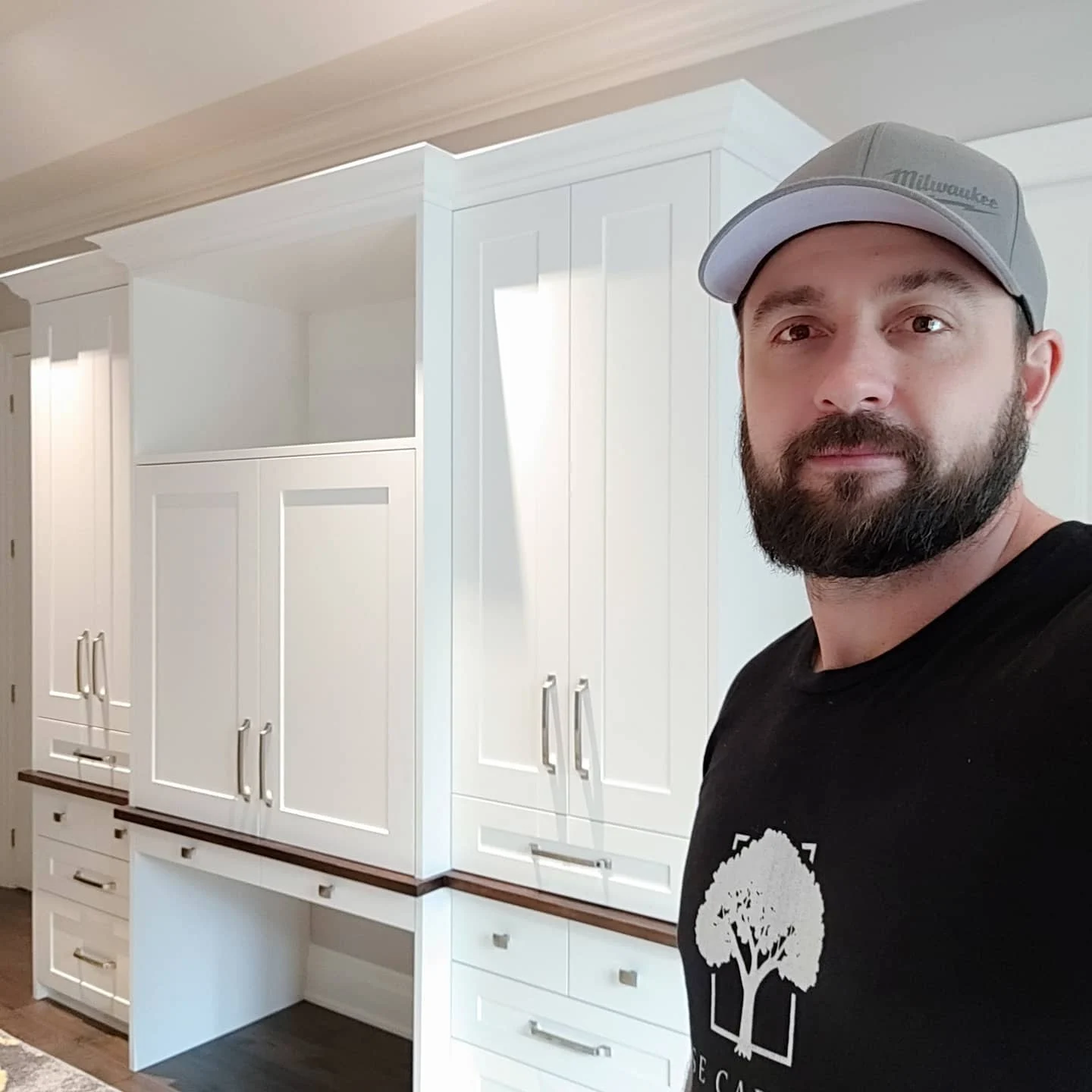
Advice From a Professional Cabinet Maker
Chase Collings, Owner of Chase Cabinetry helps homeowners across the Niagara region update their kitchens, bathrooms, and living spaces with custom cabinetry, cabinet refacing, and built-in storage. Based in Welland, Ontario, Chase Cabinetry has direct experience with the kinds of homes, layouts, and renovation goals common in this part of the province.
That practical experience matters when homeowners are making decisions about:
The goal at Chase Cabinetry is not just to make cabinets look good — it is to make them work well for the household that uses them every day.


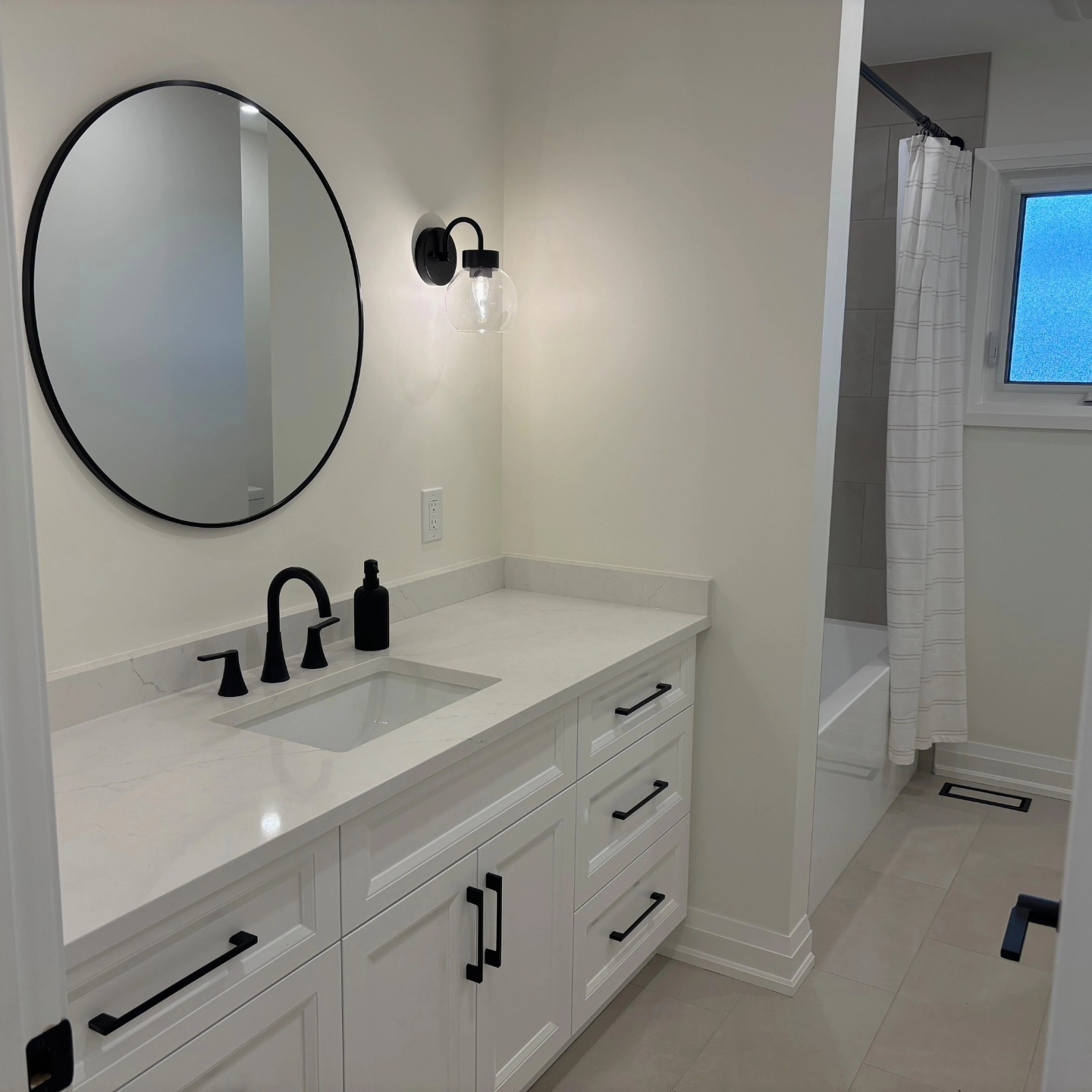
Chase Cabinetry Questions
Yes. Chase Cabinetry builds custom kitchen cabinets in Welland and works with homeowners throughout the Niagara region. That local experience matters because homes across Niagara vary quite a bit. Some projects involve older homes with uneven walls, tight layouts, or unique architectural details, while others are in newer subdivisions with more contemporary layouts and finish preferences.
A cabinet maker who understands the kinds of homes common in the area can often offer better practical guidance from the start. The design decisions are rarely just about style — they’re also about how the cabinetry needs to work in the kind of home you actually live in.
Chase Cabinetry handles a wide range of custom cabinetry and storage projects for both homes and businesses. That includes custom kitchens, bathroom vanities, built-in entertainment units, home offices, wardrobes, mudrooms, laundry rooms, closet organizers, and cabinet refacing where the existing boxes are still in good condition.
For homeowners, that kind of range can be helpful because it means the same company can often carry a consistent look and quality across different rooms in the home. It also makes it easier to discuss custom projects that don’t fit neatly into one category.
If you have a storage or cabinetry idea in mind, it’s often worth asking — even if it isn’t one of the most common project types.
Yes. Chase Cabinetry also works on select commercial projects across the Niagara region. That can include office cabinetry, reception counters, staff kitchens, and workspace storage. Commercial work often has different needs than residential projects, especially when it comes to durability, traffic, and accessibility requirements.
Because of that, each commercial job is usually considered based on its specific scope. Some spaces need straightforward built-in storage, while others require more specialized design and coordination.
Yes. Chase Cabinetry is fully licensed and insured. That’s important because it protects both the homeowner and the project. It also gives you peace of mind that the business is operating professionally and responsibly — something every homeowner should confirm before hiring any contractor.
Insurance matters in practical ways too. It helps protect against accidental property damage and ensures proper coverage for the people working on the project.
It’s one of those details that may not feel exciting, but it absolutely matters when you’re inviting someone into your home to do renovation work.
Yes. Chase Cabinetry offers free project estimates. The more information you can share at the start — photos, measurements, your location, your goals, and your timeline — the more specific and helpful that estimate can be.
A good estimate should do more than give you a number. It should help clarify the scope of the project, the options available, and what direction makes the most sense for your home.
That first conversation is often where the project starts to feel more manageable, because it turns a general idea into something more concrete.
No. Chase Cabinetry manages the different phases of the project and coordinates with other licensed and insured trades when they’re needed. That can make the process much easier for homeowners, especially in larger renovations where timing matters. Instead of trying to organize plumbers, electricians, carpenters, and installers on your own, you have one main point of contact throughout the project.
That kind of coordination often reduces confusion, keeps scheduling tighter, and helps the job move more smoothly overall.
For many homeowners, that simplicity is a major advantage.
Yes. A warranty is provided on the work performed, with the exact terms depending on the type and scope of the project. That’s worth reviewing carefully during the quote stage so you understand what’s covered, how long the coverage lasts, and what to expect if any issues come up after installation.
A good warranty adds reassurance, but it also reflects confidence in the workmanship and materials being used. It shows that the project isn’t just about getting the job done — it’s about standing behind the result afterward as well.
Projects are overseen directly by Chase Collings, who is involved as the owner, designer, and cabinet maker. For homeowners, that means the person you’re discussing the design with is also closely connected to how the project is built and carried through to installation. That kind of continuity can make communication much easier and helps keep the vision consistent from start to finish.
Some homeowners really value that direct involvement because it creates a more personal and accountable experience. Instead of being passed between departments, you’re working with the person leading the project.
Since opening in 2016, Chase Cabinetry has completed more than 275 projects across the Niagara region. That kind of track record matters because experience builds over time. Each project adds to a cabinet maker’s understanding of different home styles, room layouts, storage needs, and practical design solutions.
For homeowners, experience often shows up in the details — better planning, smoother problem-solving, and a clearer understanding of what will work well in real homes.
It’s not just about the number of projects. It’s about what that experience brings to the quality of the work.
(Project number last updated March 16, 2026)
Chase Cabinetry staff are graduates of Humber College Cabinet Making and Industrial Woodworking programs, which are well respected in Ontario. That kind of formal training matters because cabinetmaking is both a craft and a technical trade. It involves more than design — it also requires a solid understanding of materials, joinery, finishing, and how cabinetry performs over time.
When that training is combined with hands-on project experience, it gives homeowners added confidence that the work is being done with both skill and professional grounding.
Yes. A 50 percent deposit is required once the quote is accepted. That is standard for custom cabinetry work because materials need to be ordered and production begins well before installation day. The deposit helps secure the project and allows the work to move forward on schedule.
As with any renovation contract, it’s helpful to understand the payment structure clearly before the project begins so everyone knows what to expect.
When the terms are set out clearly from the start, the process tends to feel much more straightforward.
Not at this time. Payment is currently accepted by e-transfer, cheque, or cash, and credit card payments are not available. If financing is something you need to consider, it can still be helpful to discuss your project goals early, since timing or phasing may offer some flexibility.
Even without in-house financing, a clear quote can help homeowners plan next steps and decide what scope makes sense for their budget.
Payment can be made by e-transfer, cheque, or cash.
That’s helpful to know upfront because payment details are much easier to manage when they’re clear early in the process. It also helps homeowners plan around larger renovation payments without any last-minute surprises.
Since credit cards are not accepted at this time, it’s worth keeping that in mind as you prepare for the project.
The best way to reach out is by phone, email, or through the contact form on the website. When you do, it helps to include a short description of the project, your location, and a few photos if you have them. That gives the conversation more direction right away and makes it easier to offer useful guidance from the beginning.
You don’t need to have everything figured out. Just enough information to explain what kind of space you have and what you’re hoping to improve.
That usually leads to a much more productive first conversation.
Call Chase directly at (289) 673-1355, or by email info@chase-cabinetry.com
Getting started is often simpler than homeowners expect. The best first step is to reach out with the basics: what type of project you’re thinking about, where you’re located, what you’d like to improve, your timeline, and any photos or inspiration you already have. That’s enough to begin a useful conversation and start narrowing down the right approach.
You don’t need a finished plan before making contact. In most cases, the planning becomes clearer once you’ve had that first discussion and can start looking at the space through a more professional lens.
For many homeowners, the hardest part is simply starting. Once that first step is taken, the process usually feels much more manageable.
Call (289) 673-1355 or submit a consultation and quote request through the website. Chase Cabinetry is based at 42 Valencourt Drive in Welland, Ontario, and serves the full Niagara region. Workshop visits are by appointment only.
Final answer: what is the smartest way to approach a cabinet project?
The smartest approach is to start with function and build every decision from there. Think about how the space needs to work before thinking about how it should look.
Homeowners who focus first on storage, layout, durability, and daily workflow — then choose style, colour, and finish — almost always end up with a result they are satisfied with long after the renovation is complete.
Getting professional input early in the process usually pays for itself in avoided mistakes, better planning decisions, and a more accurate budget from the start.