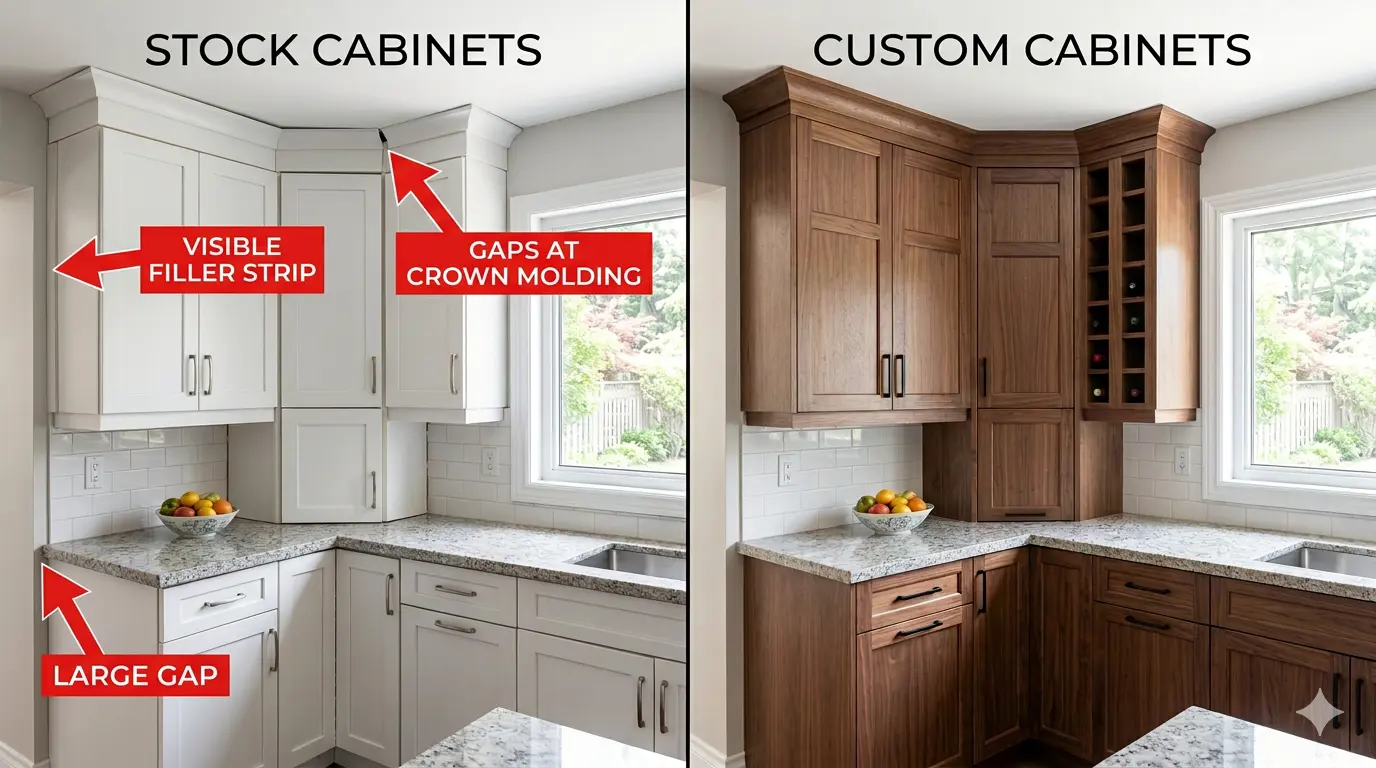
Cabinet Comparison
Custom Cabinets vs Stock vs Semi-Custom:
What’s Actually Worth It in Ontario?
Kitchen Cabinet Blog • Ontario Homeowners
If you are planning a kitchen renovation, one of the first decisions you will face is whether to choose custom, semi-custom, or stock cabinets.
At a glance, they can look similar. In reality, they perform very differently in terms of fit, function, durability, and long-term value. Before making the call, it helps to understand how this choice fits into the bigger process of planning your cabinet renovation.
The Short Answer
Each option serves a different purpose. Stock cabinets are the most affordable and fastest to install, but they offer the least flexibility. Semi-custom cabinets sit in the middle, giving you more choice but still within a manufacturer’s system. Custom cabinets are built specifically for your space, offering the best fit and functionality at a higher cost.
What Stock Cabinets Really Offer
Stock cabinets are manufactured in standard sizes and are designed for convenience. They work well when your kitchen happens to align with those dimensions.
In many homes, that is not the case. Stock cabinets often require:
- Filler strips to close gaps
- Compromises in storage
- Adjustments that reduce usable space
Over time, those compromises tend to show up in daily use.
Where Semi-Custom Fits In
Semi-custom cabinets offer more flexibility, but they still follow a predefined system. You usually get more choices in style and finish, plus some size adjustments.
This can work well if your layout is relatively standard but you want more personalization than stock options allow. You are still designing within constraints, though, which means some storage ideas or layout improvements may not be possible.
Why Custom Cabinets Are Different
Custom cabinets are built from the ground up for your space. Every dimension, feature, and finish is planned around how the kitchen is actually used.
This approach is especially valuable in:
- Older homes with uneven walls
- Smaller kitchens where every inch matters
- Layouts with unique angles or tight constraints
The result is not just a better fit. It is a kitchen that feels easier to use every day.
Cost Comparison in Ontario
Typical ranges look like this:
- Stock cabinets: $5,000 to $12,000
- Semi-custom cabinets: $10,000 to $25,000
- Custom cabinets: $15,000 to $40,000+
For a fuller pricing breakdown, including what drives cost up, read the cabinet cost guide for Ontario.
The Real Difference: Daily Function
The biggest difference between these options is not just visual. It is functional. In a well-designed custom kitchen, storage feels intuitive. Items are easier to reach, counters stay clearer, and everyday tasks take less effort.
That is also why construction details matter. If you want to understand what separates better cabinetry from lower-grade options, see what makes a kitchen cabinet high quality.
How to Choose the Right Option
Stock cabinets make sense when the layout is straightforward and budget or timeline is the main priority. Semi-custom works well when you want improved aesthetics without full customization. Custom cabinets are usually the best choice when the space has challenges, storage matters, or you plan to stay in the home long-term.
If you are specifically trying to decide whether the added investment makes sense, the best follow-up read is are custom cabinets worth it?
Final Thought
A kitchen renovation is something you live with every day. The best results come from focusing on how the space works first, then building style decisions around that.
Simple styles tend to last the longest, which is why shaker and flat-panel doors are usually the safest long-term choices. They have clean lines, balanced proportions, and a look that isn’t overly tied to one specific trend. That matters when you’re making an investment you want to feel good about for years.
More ornate door styles, heavy mouldings, or trend-driven details can look impressive at first, but they often date more quickly. A simpler cabinet style gives you more flexibility if your tastes evolve or the rest of the room gets updated later.
Timeless design usually comes down to restraint. When the cabinet style is clean and well-proportioned, it’s much easier for the kitchen as a whole to age gracefully.
A living room built-in can be as simple or as detailed as the room needs. Some are designed around a fireplace or TV wall, with shelving on either side and closed cabinetry below. Others include full wall-to-wall storage, display shelves for books or decor, media compartments, or even window seats and surrounding cabinetry.
What makes built-ins so effective in a living room is that they combine function and visual impact. They can hide clutter, frame the room beautifully, and make the space feel more custom and complete.
In many homes, a well-designed built-in becomes one of the main focal points in the room.
Yes — in most cases, refacing costs quite a bit less than full replacement. That’s because you’re keeping the existing cabinet boxes instead of tearing everything out and starting over. You avoid demolition, disposal costs, new box materials, and a large portion of the labour involved in a full cabinet install. Using the typical Ontario price ranges — roughly $5,000 to $15,000 for refacing versus $15,000 to $40,000 or more for custom replacement — the savings generally fall in the 40 to 60 percent range, though the exact figure depends on the scope and materials involved in each approach.
For homeowners whose layout still works well, that can make refacing a very smart investment. You get a fresh, updated look without paying for changes you may not actually need.
The key question is whether the cabinets are still structurally sound and whether the kitchen works well as it is. If the answer to both is yes, refacing often gives you the best balance of cost and impact.
In the Niagara region, cabinet refacing usually falls somewhere in the $5,000 to $15,000 range, depending on the size of the kitchen and the choices you make along the way. The biggest factors are usually door style, finish, hardware, and whether you’re adding extras like soft-close hinges, pull-out shelves, or interior updates. A smaller, simpler kitchen will land at the lower end, while a larger kitchen with premium finishes or added features will cost more.
One reason refacing appeals to so many homeowners is that it delivers a major visual update without the cost of replacing all the cabinet boxes. That makes it a practical middle-ground option for kitchens that still function well but feel dated.
The best way to get an accurate number is always to look at the actual space, because scope matters just as much as square footage.
Quite a few useful upgrades can be added during a refacing project, depending on the condition of the cabinets and the scope of work. Common additions include soft-close hinges, updated hardware, pull-out shelves, improved pantry storage, built-in garbage and recycling, and better interior organization. In some cases, under-cabinet lighting or shelf updates can also be worked into the project.
This is one of the reasons refacing can feel like more than just a cosmetic improvement. Even if the layout stays the same, small functional upgrades can make the kitchen noticeably easier to use.
The best upgrades are usually the ones that improve your everyday routine, not just the ones that look good in photos.