Quality Guide
What Makes a Kitchen Cabinet High Quality? (And What to Avoid)
Kitchen Cabinet Blog • Ontario Homeowners
Cabinet quality is not always obvious at first glance. Two kitchens can look similar on day one but perform very differently over time.
If you are evaluating quotes or materials, keep this guide connected to your overall cabinet renovation plan so quality decisions support your budget and layout goals.
It Is About the Whole System
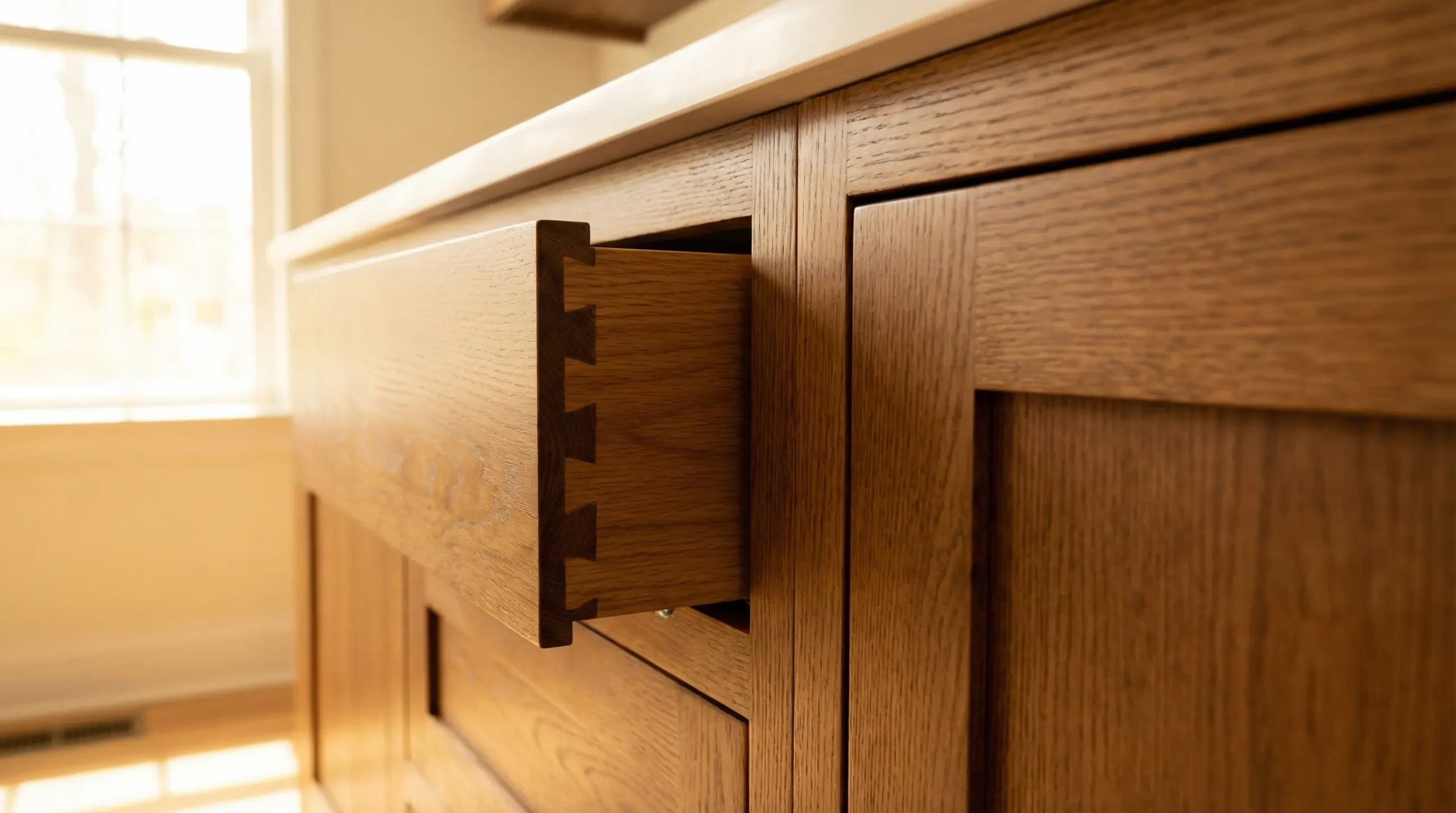
Cabinet quality comes from a combination of factors rather than one feature. Materials, construction methods, hardware, finish durability, and installation accuracy all work together.
- Cabinet box material affects strength and moisture resistance
- Joinery and construction affect long-term stability
- Hardware affects daily function and reliability
- Finish quality protects surfaces from wear
Material Choices Matter
For cabinet boxes, plywood generally offers better strength and moisture resistance than particleboard. This difference becomes especially important near sinks and dishwashers, where exposure to moisture is more likely.
These material differences also affect pricing, which is why the cabinet cost guide and the cabinet type comparison are useful companion reads.
Finish Quality Is Critical
The finish protects cabinets from grease, moisture, and cleaning products. A high-quality finish extends the life of the cabinet, while a poor finish can fail prematurely even on good materials.
Hardware Affects Daily Experience
Hardware influences how cabinets feel to use. Well-made hinges and drawer slides provide smooth operation and long-term reliability, while lower-quality options can wear out quickly.
Installation Is Often Overlooked
Even well-built cabinets can perform poorly if installation is not done correctly. Alignment, spacing, and support all affect how cabinets function over time.
What to Watch For
When evaluating options, look beyond surface appearance. Be cautious of vague descriptions of materials, unclear construction methods, or unusually low quotes without detail.
If those warning signs are present, it may also change whether keeping existing cabinetry makes sense. In that case, review when cabinets should be refaced or replaced.
Final Thought
High-quality cabinets feel solid, consistent, and well-fitted. More importantly, they continue to perform that way for years.
The best cabinet design starts with specific storage questions. Think through everything that needs a home in your kitchen — dishes, pots and pans, pantry items, baking tools, cleaning supplies, food containers, recycling, compost, small appliances, and anything else that gets used regularly.
Then go a little further. What about cookbooks? Reusable bags? Pet supplies? Seasonal platters? Vitamins? Kids’ lunch gear?
These are the things that often get forgotten during planning, but they still need space once the kitchen is finished.
The more clearly you can describe what you actually store and how often you use it, the better your cabinet layout will be. A good designer can take that information and turn it into storage that feels intuitive, rather than generic.
Getting started is often simpler than homeowners expect. The best first step is to reach out with the basics: what type of project you’re thinking about, where you’re located, what you’d like to improve, your timeline, and any photos or inspiration you already have. That’s enough to begin a useful conversation and start narrowing down the right approach.
You don’t need a finished plan before making contact. In most cases, the planning becomes clearer once you’ve had that first discussion and can start looking at the space through a more professional lens.
For many homeowners, the hardest part is simply starting. Once that first step is taken, the process usually feels much more manageable.
Call (289) 673-1355 or submit a consultation and quote request through the website. Chase Cabinetry is based at 42 Valencourt Drive in Welland, Ontario, and serves the full Niagara region. Workshop visits are by appointment only.
White continues to be the most popular cabinet colour, and for good reason. It works with almost any countertop, backsplash, flooring, or hardware choice, and it helps the kitchen feel bright and open.
Natural wood tones have also become much more popular, especially lighter options like white oak and maple. They bring warmth into the room and create a softer, more grounded look.
Soft greys, warm off-whites, and two-tone kitchens are also common choices because they strike a nice balance between timeless and current.
Part of what makes these colours so popular is flexibility. They tend to work well over time, photograph well, and make it easier to update the rest of the kitchen later without needing to change the cabinets.
Stock cabinets come in fixed sizes and finishes from a manufacturer’s product line. Custom cabinets are built to your exact measurements, which means no fillers, no awkward gaps, and far more flexibility in how storage is designed.
Stock cabinets are built for convenience. They come in standard sizes, usually in 3-inch increments, and are available quickly — often within a week or two. That works well if your kitchen happens to fit those dimensions. But most don’t.
In many Ontario homes, walls aren’t perfectly square, ceilings vary, and layouts have quirks. That’s where stock cabinets fall short. You end up with filler pieces, gaps, and storage that doesn’t quite work the way you want it to.
Custom cabinets take a different approach. Everything is built to fit your exact space, so instead of working around limitations, the design works around you.
Since cabinetry is commonly estimated to make up 30–40% of a kitchen renovation budget — a figure widely cited across the Canadian building industry — this decision matters more than most people expect. If you’re planning to stay in your home long-term, custom cabinets often deliver better value through improved storage, better fit, and a more intentional result.
Usually, yes. Keeping the same layout often saves money because you avoid moving plumbing, electrical, gas lines, or structural elements. Those changes can add a lot to a renovation budget, even before the new cabinetry is installed.
That’s why many homeowners choose to improve the cabinet quality, storage design, and overall look while leaving the main kitchen footprint in place. It can still result in a major upgrade without the added cost of reworking the room.
If the current layout functions reasonably well, staying close to it is often one of the smartest ways to keep a project more manageable. It’s also worth noting that in Ontario, moving plumbing, electrical, or gas lines typically requires permits and licensed tradespeople, which adds both time and cost. Structural changes, such as removing or modifying load-bearing walls, require engineering review and building permits. These requirements aren’t obstacles — they’re there to protect you — but they are important to plan for if a layout change is on the table.